
The Early Kindergarten Program at Sapling
Our pre-K program.
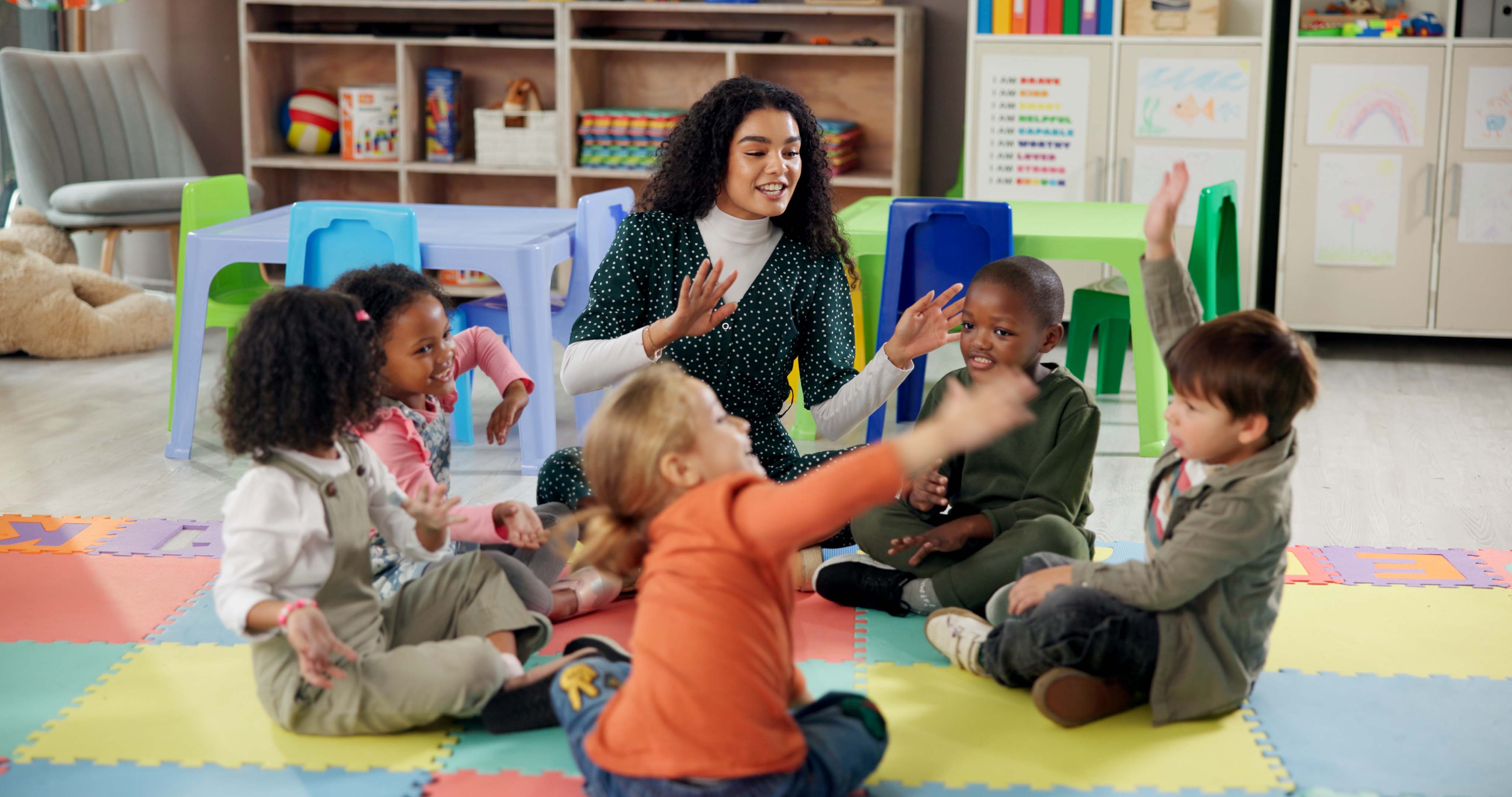
During the year before they start kindergarten, children are becoming more independent and more curious about how things work. They are learning to focus for longer, follow multi-step directions, and work as part of a group. Children show a growing interest in letter sounds and counting. Our teachers plan and lead activities in early reading and writing, math, and science, and give children time to choose their own play. Children practice listening during whole-class activities, taking turns in small-group work, and making decisions for themselves during free play. Focus, listening, and working in a group are habits kindergarten classrooms rely on throughout the day, and this year gives your child time to work on them.
How your child grows in this room
Over this year, children grow as speakers, early readers, and writers. They also start reasoning with numbers, testing ideas in science, and reading maps, while their coordination improves and they become better at cooperating and managing their feelings. Some activities bring the whole class together, and others happen in a small group or one on one with a teacher. Teachers shape each lesson to suit each child’s abilities and interests. Learning centers around the room let children choose what to do and work on a skill on their own or with a classmate.
The day is guided by The Sapling Curriculum, our approach to early learning.
Language & Early Literacy
Connecting spoken sounds to written letters
Children use language to explain their thinking, ask questions, and tell longer stories. They enjoy word play and can listen to longer books read aloud.
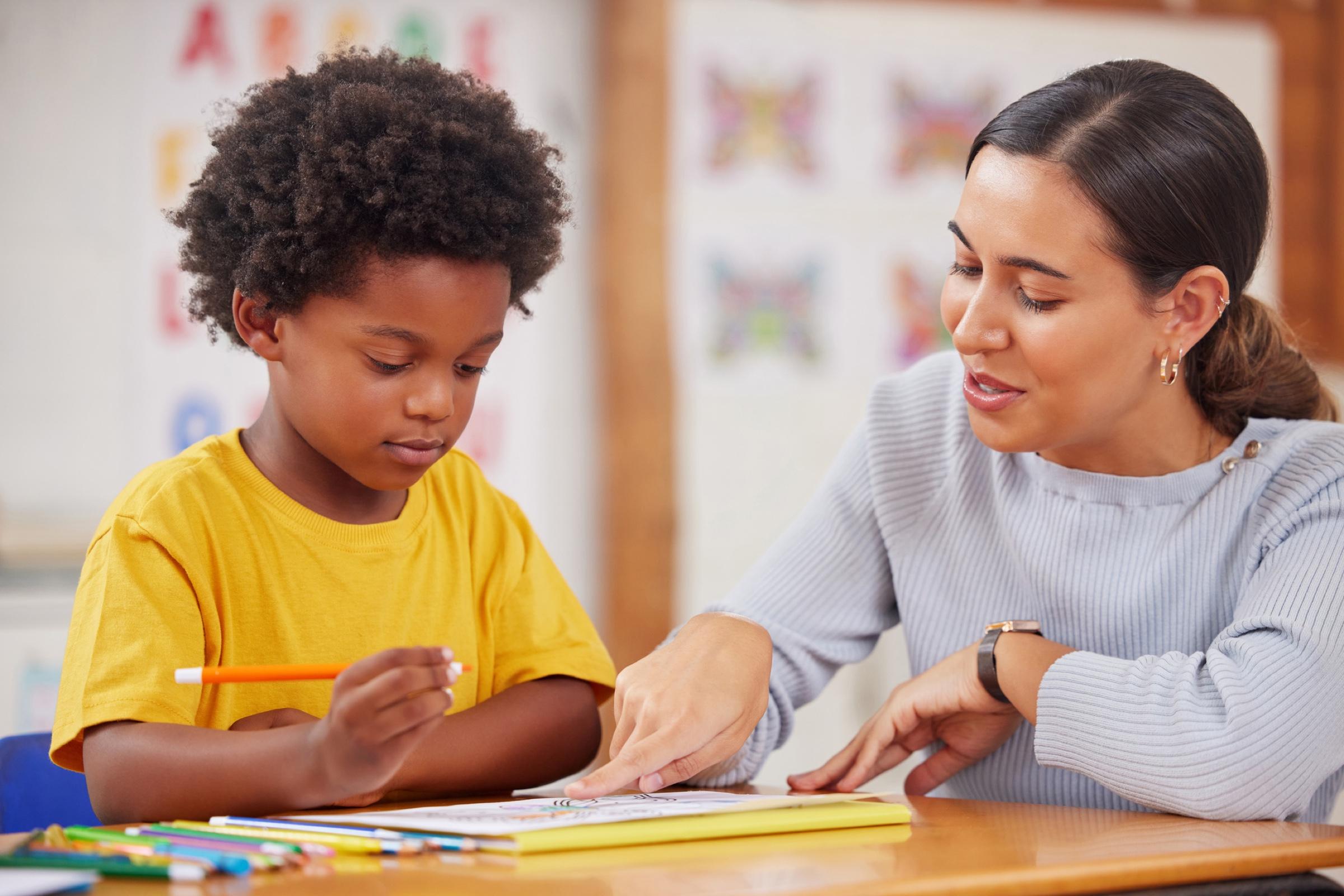
In rhyming games, children listen for words that sound alike. Teachers lead sound games that build phonemic awareness, the skill of picking out each separate sound in a spoken word. In letter-sound activities, children begin matching each sound with its written letter. Kindergarten reading lessons continue this sound and letter work. When teachers read aloud, they choose fiction and non-fiction and discuss with children how a made-up story differs from a book of facts. Children practice writing their own names and early words, and as they share their own ideas, they work on sentence structure, putting words in an order that makes sense.
What your child is working on
- Blending separate sounds into a word
- Matching letters to the sounds they make
- Telling fiction apart from non-fiction
- Putting their own ideas into full sentences
- Writing their name and early words
Early Math
Solving number problems together
Children enjoy number problems, especially when they can work through one with a friend. They are beginning to understand that adding to a collection or taking some away changes the total.
In small groups, children add, subtract, and solve problems with their classmates, using materials they can move and count, and they learn to recognize and write numerals. Teachers encourage mathematical reasoning, the habit of explaining why an answer makes sense, by asking how the children reached an answer and whether another way would work. Hearing how a classmate solved the same problem gives each child another approach to try next time. This hands-on work comes before the written arithmetic children meet in the early grades of school.
What your child is working on
- Solving a number problem with classmates
- Adding to a collection and taking some away
- Checking an answer by counting again
- Trying a second way to solve a problem
- Recognizing and writing numerals
Science
Testing ideas against what happens
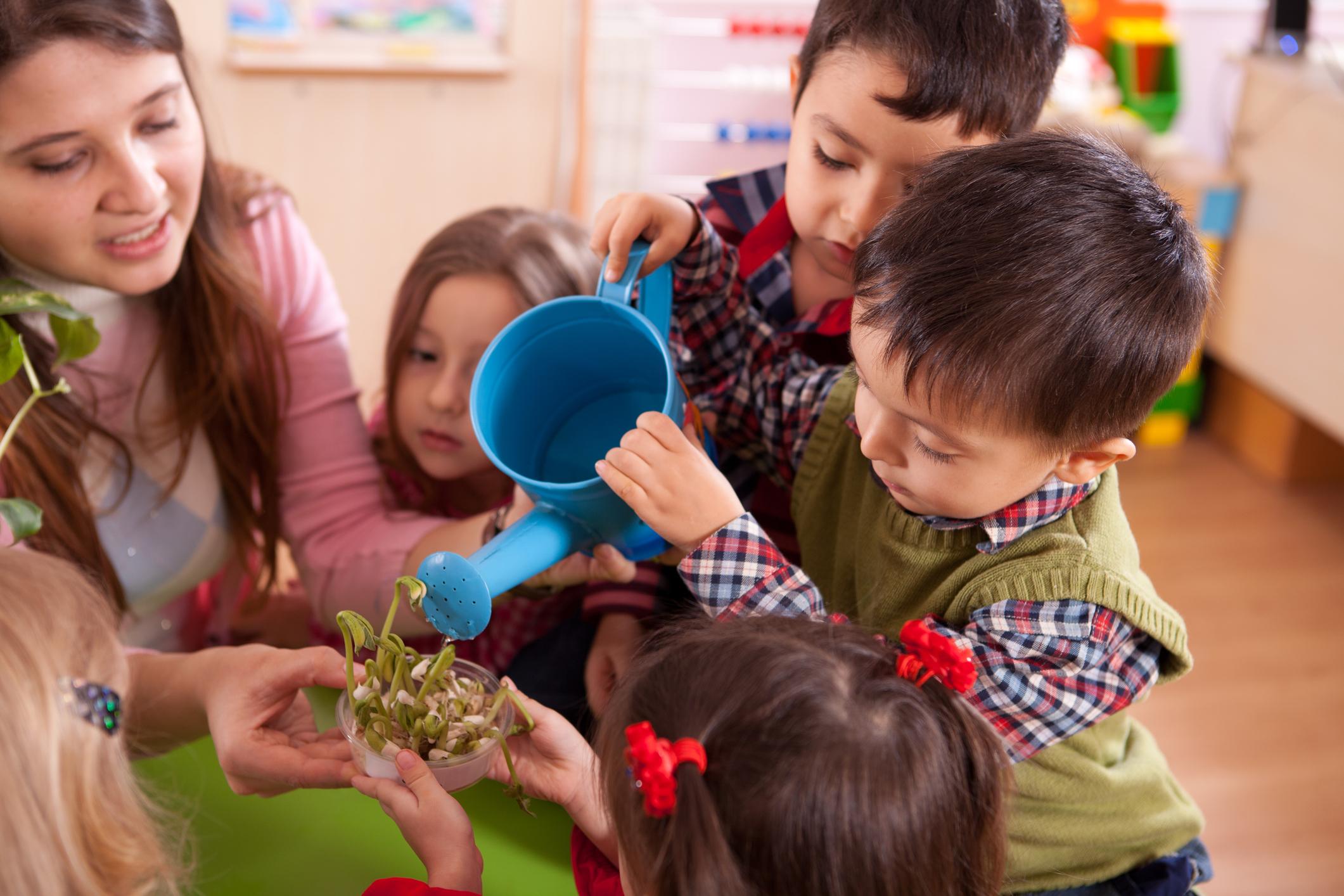
Children ask a great many questions about why things happen, and they often want to check an idea of their own. They like working a question through with classmates.
Teachers plan experiments, some of them outdoors, that introduce scientific inquiry, which means finding the answer to a question by trying an idea and watching what happens. Children often carry out an experiment with a partner. Afterward, they compare the result with what they predicted and talk about any difference. Children meet these same steps of predicting, testing, and comparing again in school science lessons. When the class is outside, they look closely at the natural world and describe the details they notice.
What your child is working on
- Asking a question an experiment could answer
- Testing an idea with a partner
- Comparing a result with their prediction
- Suggesting why a result was unexpected
- Describing what they notice outdoors
Social Studies
Reading maps and comparing communities
Children are curious about places well beyond their own street. They ask where people live, how far away somewhere is, and what life is like there.
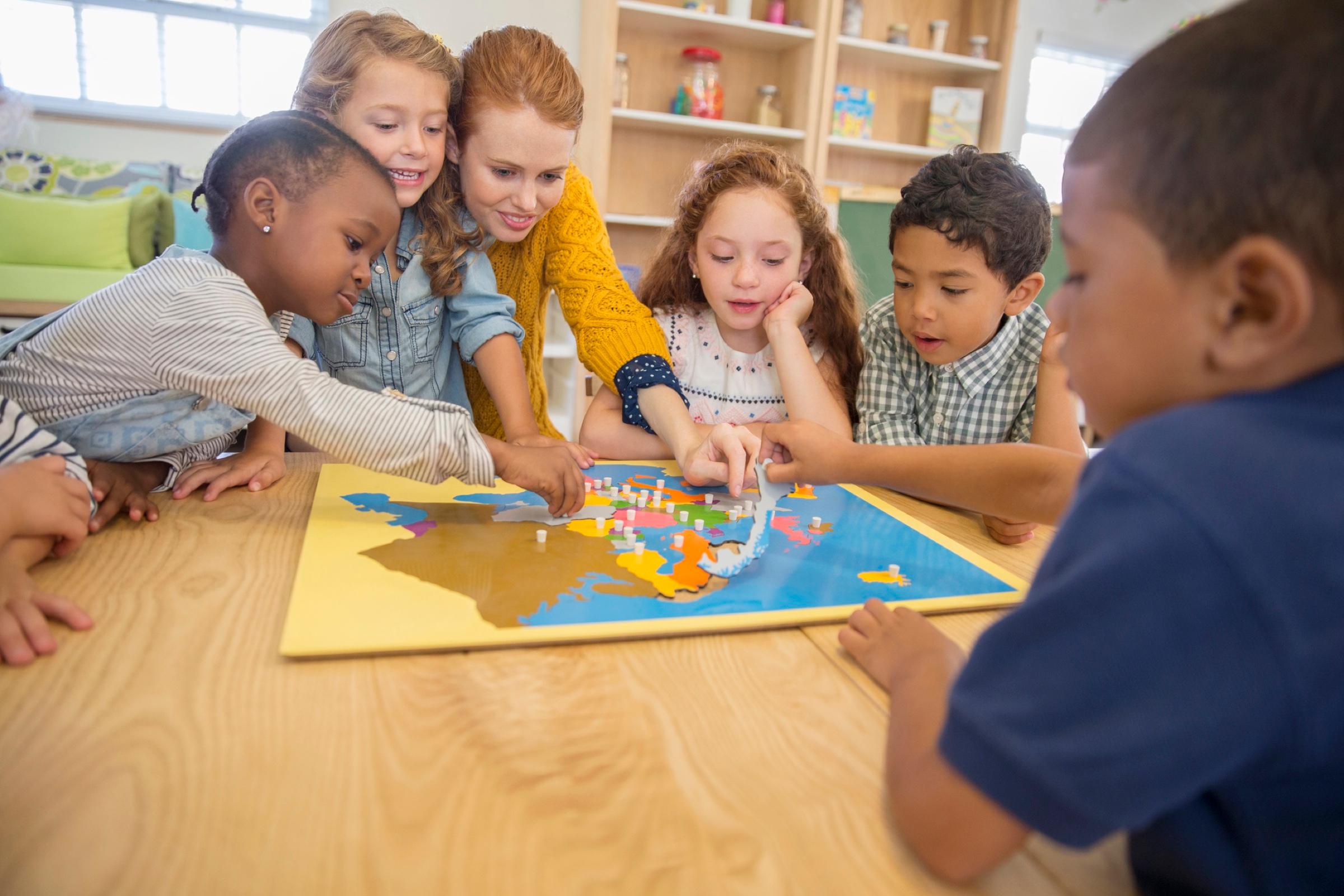
Teachers use maps to introduce geography, the study of places on the earth and the people who live there. Children start with maps of settings they know, such as the classroom or a street, and then find and name the continents on a world map. Moving from a map of a familiar place to a map of the world helps children see where their own neighborhood fits. In conversations about their own neighborhoods and about family life in other countries, children begin to see how communities differ. Map reading and these conversations give children a first look at social studies, which becomes a school subject in elementary school.
What your child is working on
- Finding a familiar setting on a map
- Naming the continents on a world map
- Describing their own neighborhood
- Comparing daily life elsewhere with their own
Physical Development
Coordinating the whole body and the hands
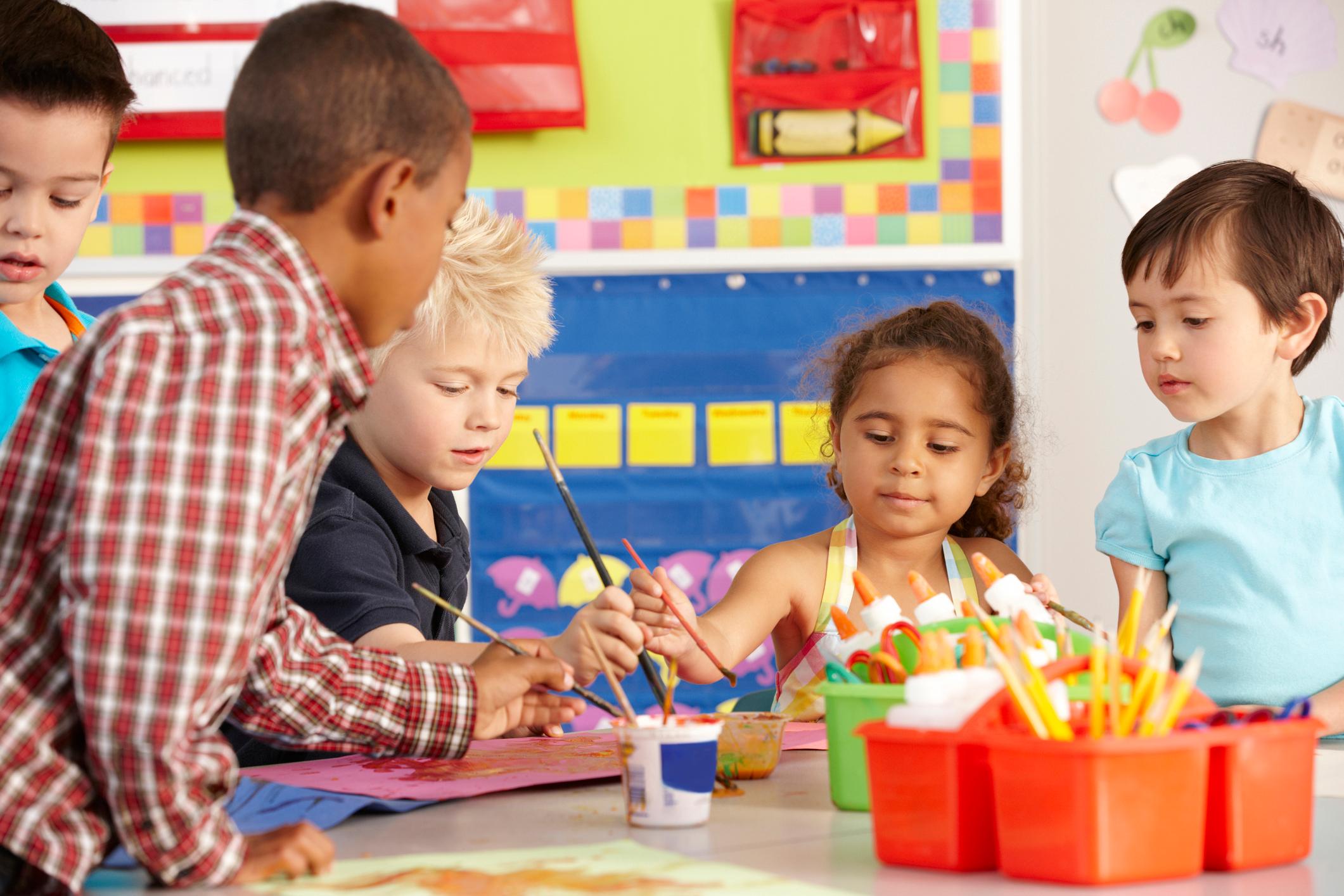
Children build strength, coordination, speed, and balance through active physical play. They also continue developing fine motor skills as they practice drawing, cutting, and other activities that encourage focus, control, and creativity.
Teachers plan active games on the gated playground, where children run, climb, balance, and play with balls, building large motor skills, the coordinated use of the body’s biggest muscles. At the table, children draw, cut along lines with scissors, and work on holding a pencil in a way that lets them form letters. Each of these calls on fine motor skills, the precise control of the fingers and thumbs. Pencil grip keeps developing in kindergarten, where handwriting becomes part of the school day.
What your child is working on
- Cutting along a line with scissors
- Climbing and balancing outdoors
- Gripping a pencil to form letters
- Running and changing direction in games
- Passing a ball back and forth with a classmate
Social & Emotional Development
Cooperating in play and building self-control
Children work together to develop shared ideas, make decisions, and take on different roles during play. As they interact with their peers, they are also learning to manage big emotions, work through challenges, and return to activities with growing confidence and independence.
Teachers support cooperative play, where children work toward the same goal. They help children agree on a plan and on how to share materials. They also guide self-regulation, the ability to manage feelings and actions. When a child is upset, teachers help them find ways to calm down so they can return to play. Children take turns offering suggestions to their classmates and accepting a plan that someone else proposed. Settling on shared plans and calming down after strong feelings are skills children continue to develop in group work at school.
What your child is working on
- Agreeing with classmates on a plan for play
- Deciding with others how to share materials
- Pausing before acting when upset
- Rejoining play after taking a break
- Accepting a classmate’s idea for a game
How your child is cared for in the Early Kindergarten room
Care in this room includes mealtimes and outdoor play, with teachers supervising and guiding children throughout.
MealtimesLunch with the class
Lunch with the class
Children eat lunch together at the table, with a teacher present to supervise and encourage conversation. They practice describing their experiences and listening to classmates.
OutsideTime on the playground
Time on the playground
Weather permitting, children play on the gated playground on our grounds. Teachers supervise and help children work through disagreements. Free play gives children space to make up games, cooperate with friends, and explore the outdoors. When conditions are unsuitable, teachers lead active play indoors.
Keeping you connected
At the end of each day, families receive a summary through our parent app. It includes photos and information about meals, rest, and the experiences your child participated in throughout the day.
Schedule a tour of the Early Kindergarten room
We welcome you to visit The Sapling School, explore our classrooms, meet our teaching team, and experience firsthand what makes our school a special place for children to grow, learn, and lead.