
The Mobile Infant Program at Sapling
In the Mobile Infant room, children are gaining mobility and independence, each at their own pace. Teachers arrange the classroom for moving and exploring, with clear floor space, low and sturdy furniture, and shelves children can reach without help. Teachers encourage each child to try new movements and allow time to practice, helping your child build the strength, balance, and confidence to explore the room more freely.
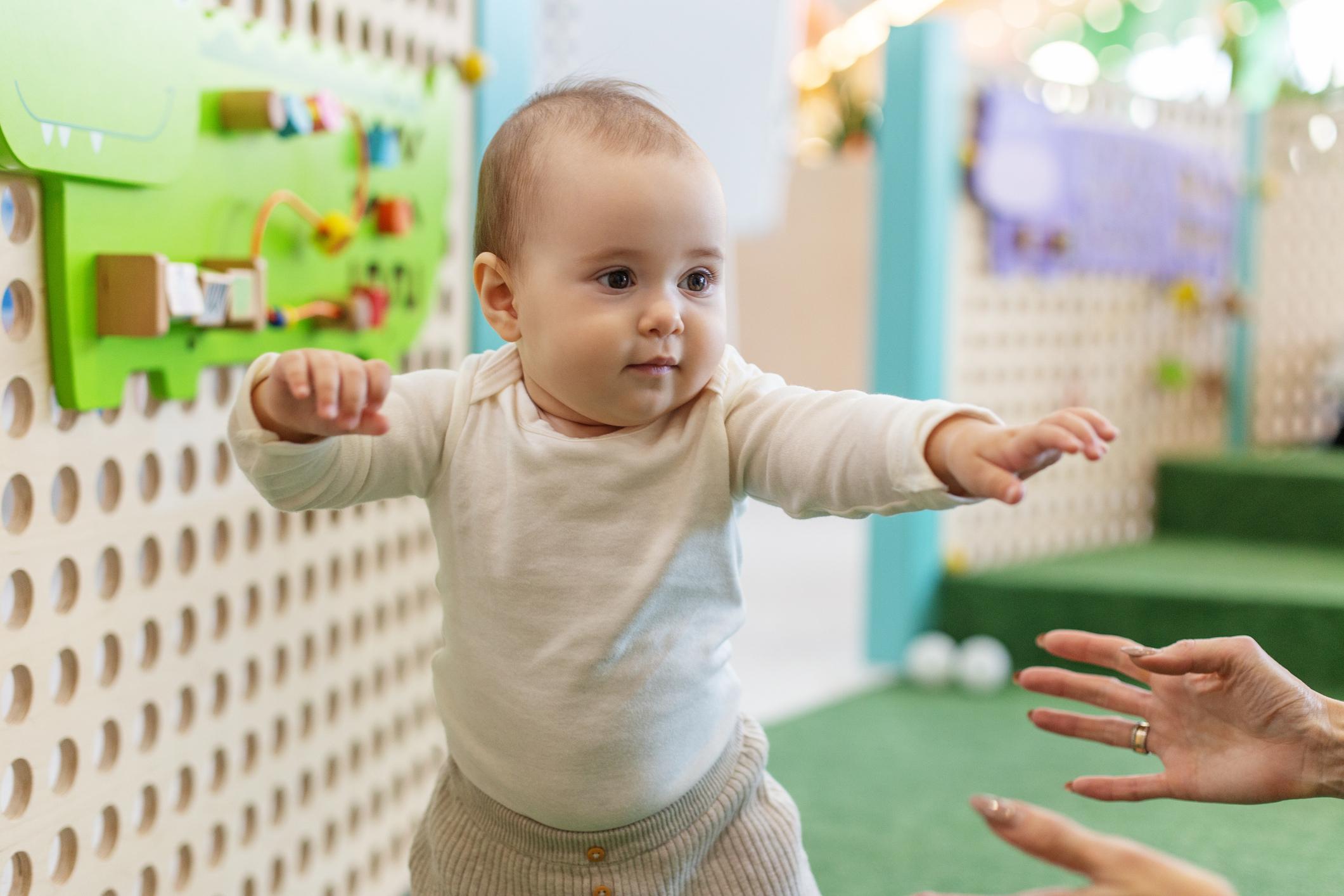
How your child grows in this room
At this age, children are gaining control of their bodies and using their hands with more purpose. They are also building language, learning how the objects around them work, and taking more interest in other children. Teachers support this growth through play, music, and everyday routines such as meals and getting ready for a nap.
Physical Development
Building strength and balance for walking and climbing
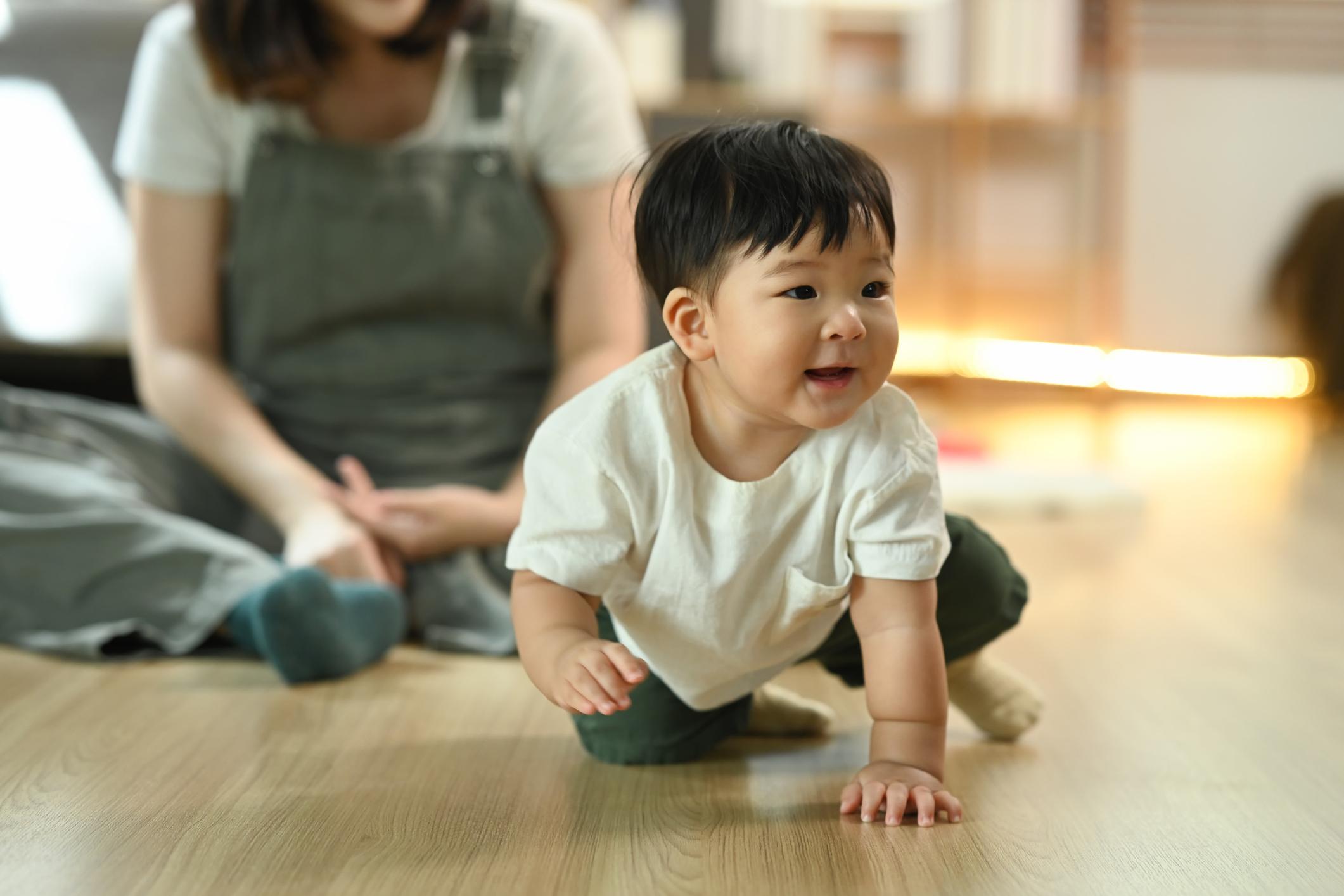
Children are working on large motor skills, using the whole body to move and keep their balance. Teachers keep floor space clear for crawling, first steps, and cruising, which means walking while holding onto furniture, and provide soft surfaces for climbing. As children practice, teachers stay close and help each child get back up when they lose their balance.
What your child is working on
- Cruising from one piece of furniture to another
- Taking first steps without support
- Climbing onto soft, low surfaces
- Getting back up and trying again
- Standing steady while using their hands
Fine Motor Skills
Using the hands and fingers with more control
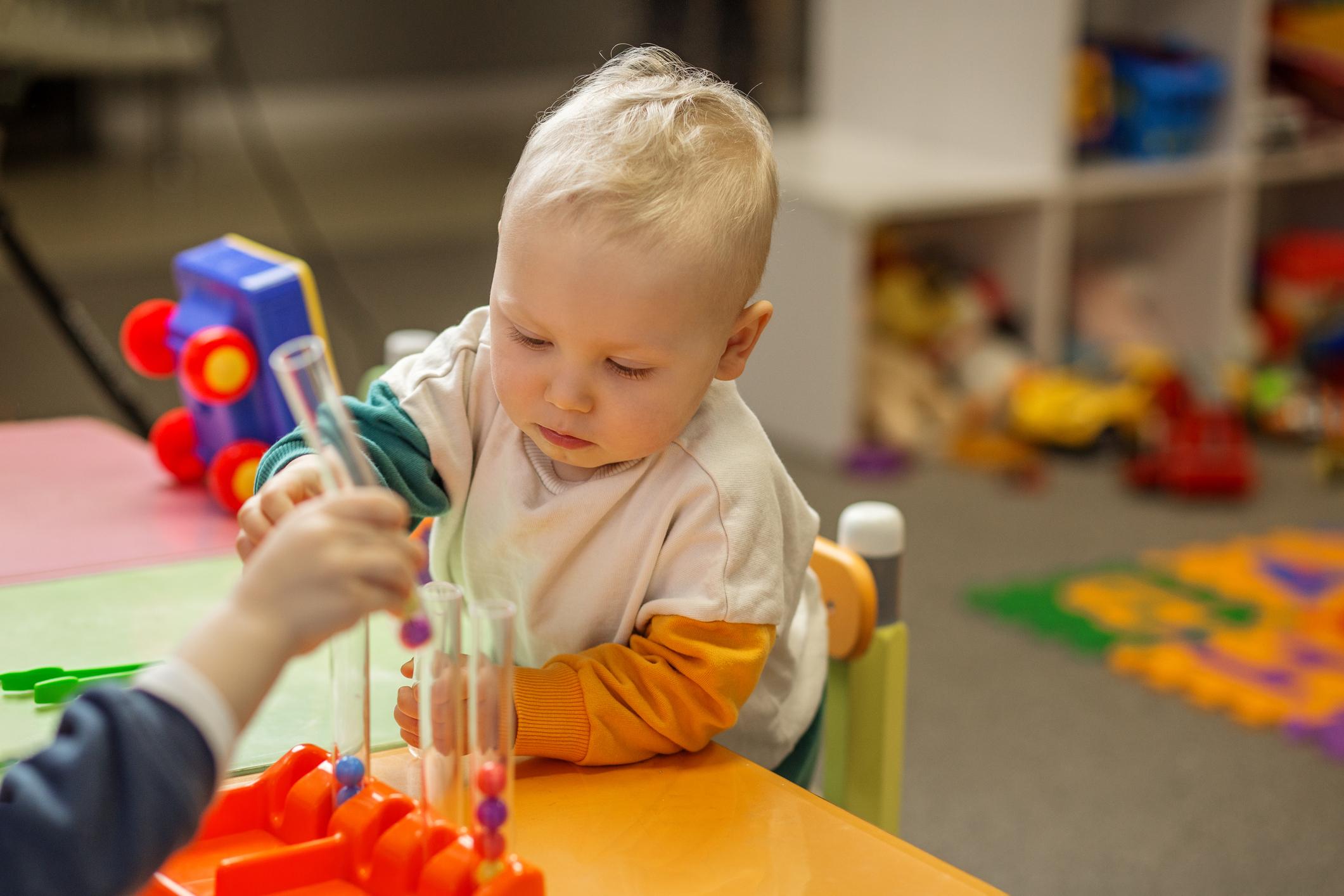
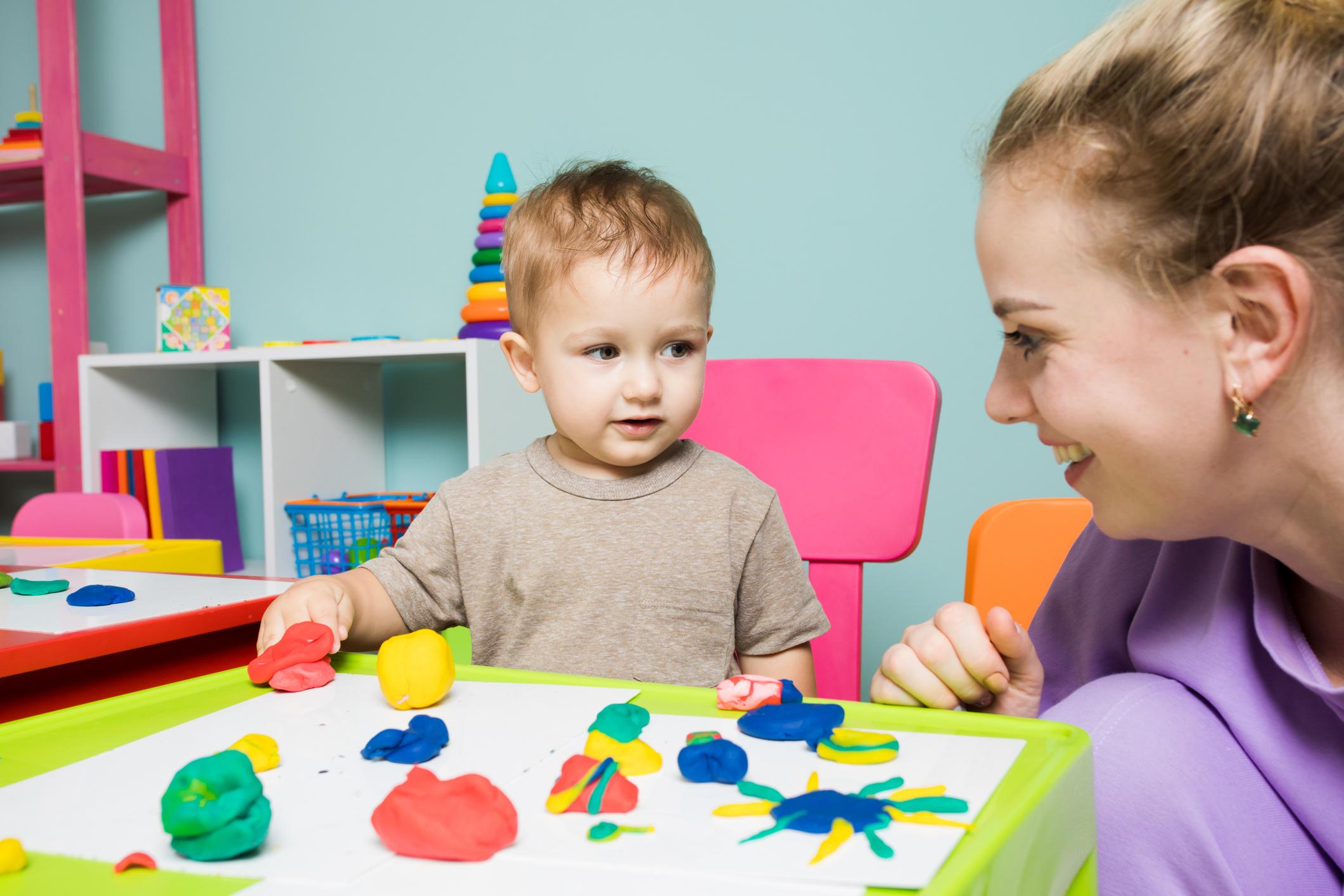
Children are learning to pick things up, let go of them on purpose, and handle small objects. Teachers lead finger-play, which means songs and rhymes with hand movements for children to copy, and offer toys to turn over, fill, and empty. In art activities, children practice mark-making, the first scribbles and strokes they make with crayons and paint. At meals, children hold their own cups, building the hand control they use to feed themselves.
What your child is working on
- Picking up small objects and letting go
- Turning a toy over to look at it
- Copying the hand movements in a song
- Holding their own cup at the table
- Filling and emptying containers
Language & Communication
Understanding more words and beginning to speak
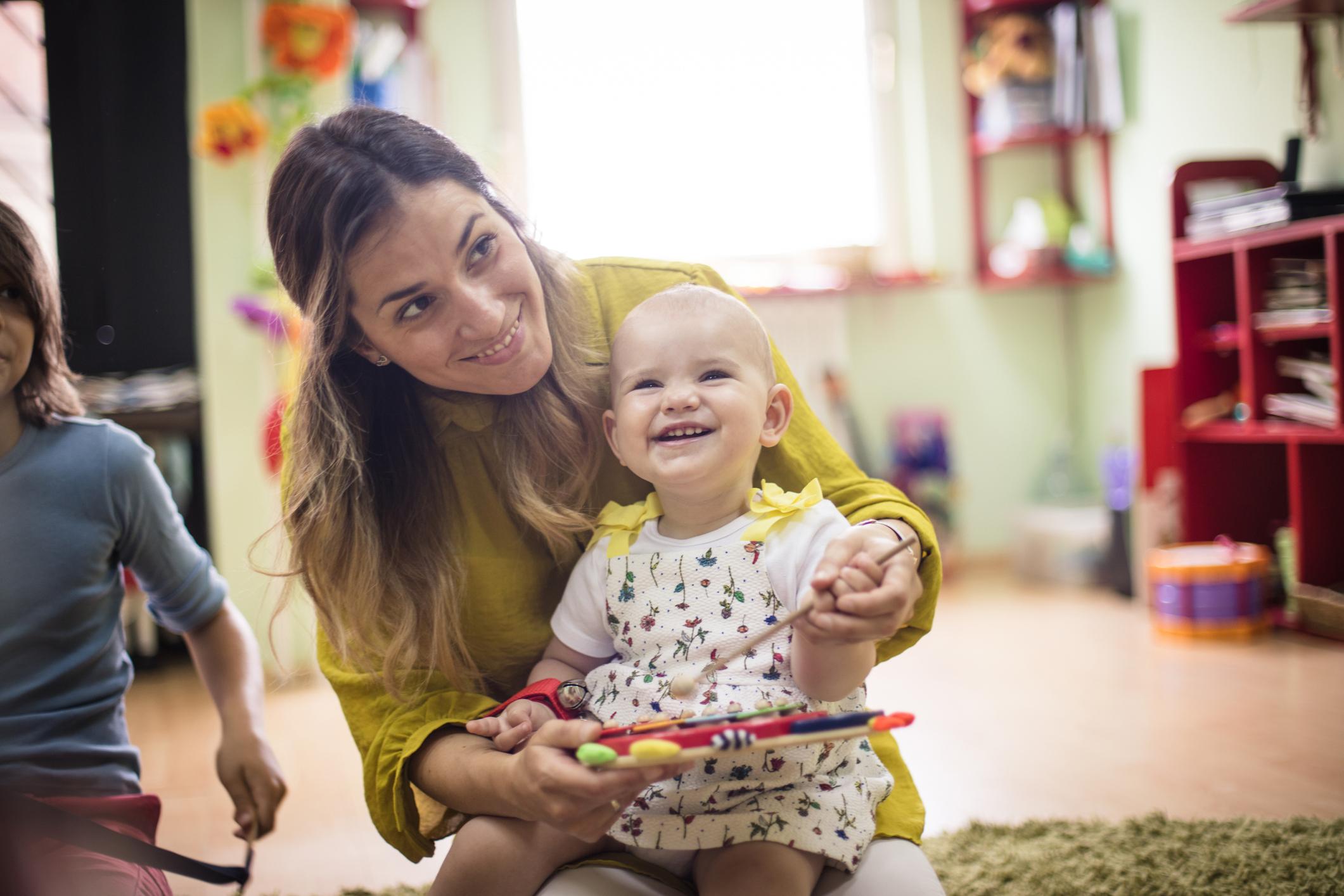
Children are beginning to communicate with sounds, gestures, and sign language, and some are saying their first words. During play, meals, and diaper changes, teachers name objects and actions and respond when a child points, makes sounds, or tries a word. Teachers share picture books with children and ask them to find familiar things on the page. Children learn simple signs for everyday needs, and teachers say the word aloud with each sign, helping children connect signs with spoken words.
What your child is working on
- Following simple, familiar requests
- Pointing to show what they want
- Using first words and signs
- Responding to their own name
- Finding the picture a teacher asks for
Cognitive Development
Finding out how objects move, open, and fit together
Children are starting to learn cause and effect, which means the link between an action and what happens next. They push, drop, open, and stack things to find out what each one does. Teachers offer materials that roll, open and close, or fit inside one another, and name shapes and sizes as children handle them, helping children notice which things are bigger or smaller.
What your child is working on
- Dropping and rolling toys to watch where they go
- Opening and closing lids and containers
- Fitting a smaller cup inside a bigger one
- Noticing which of two things is bigger
- Trying another way when something will not fit
Social & Emotional Development
Noticing other children and learning about feelings
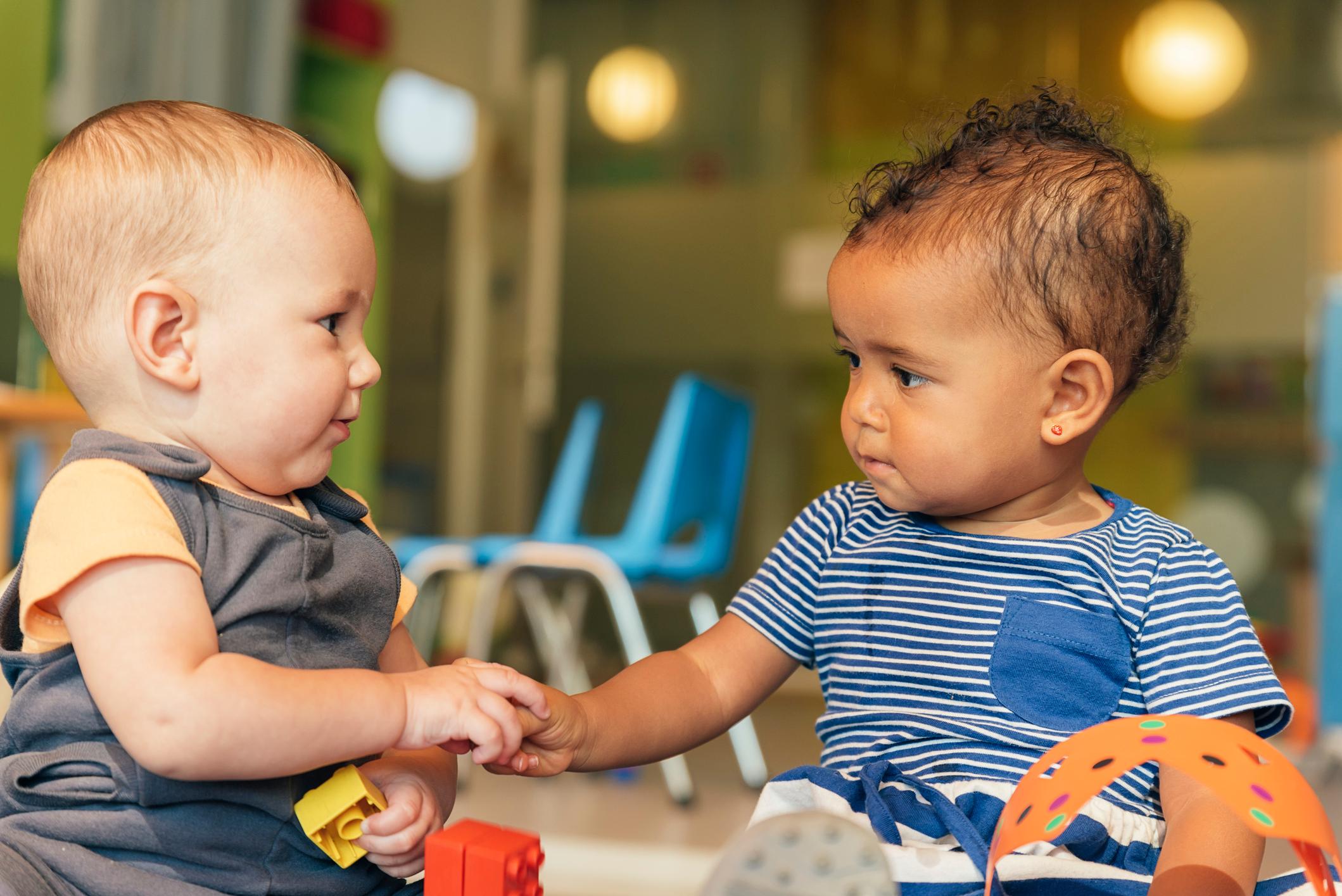
Children watch the other children in the room closely and copy what they see. They begin parallel play, which means each child plays with their own toys next to another child. Teachers comfort a child who is upset and put the feeling into words. Teachers also step in during disagreements over toys. With this support, children begin to recognize their feelings and calm down more easily.
What your child is working on
- Watching and copying other children
- Handing a toy to another child
- Learning names for how they feel
- Reaching for a teacher for comfort
Tiny Movements
This room's music and movement class
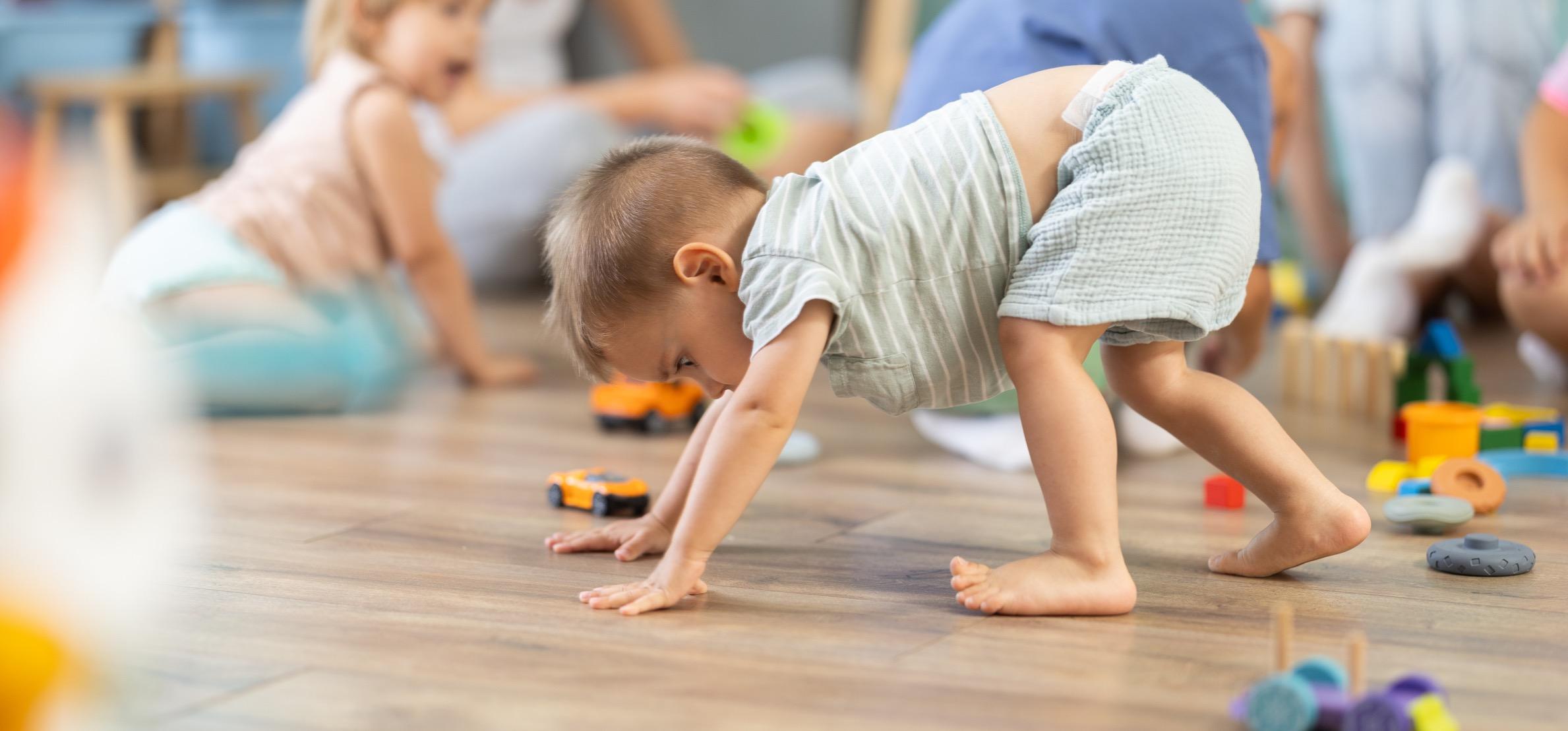
Every child in the room takes part in Tiny Movements, where teachers lead gentle stretches for children to copy and put on music for moving and dancing. Children practice balance and coordination as they stretch, sway, and dance.
What your child is working on
- Stretching along with a teacher
- Swaying and bouncing to music
- Moving together with the class
- Practicing balance and changing direction
How your child is cared for in the Mobile Infant room
Care in this room includes rest, meals, diaper changes, and outdoor play. The class rests and eats together, with teachers helping each child adjust to the shared routine.
RestOne nap a day
One nap a day
Children rest on cots during the daily nap. Teachers help them get comfortable and stay nearby while the class rests.
MealtimesEating together as a class
Eating together as a class
The class eats nutritious, balanced meals together at the table. Teachers sit with the children and offer help as they eat. Children pick up small pieces of food and practice feeding themselves.
DiaperingHow diaper changes are handled
How diaper changes are handled
Diapers are changed as needed. Teachers talk with each baby during diaper changes.
OutsideTime outdoors
Time outdoors
Weather permitting, teachers take the class to the gated playground, where children can crawl, walk, and explore. Teachers stay close as children play, helping them move around safely.
Keeping you connected
At the end of each day, families receive a summary through our parent app. It includes photos and information about meals, rest, and the experiences your child participated in throughout the day.
Schedule a tour of the Mobile Infant room
We welcome you to visit The Sapling School, explore our classrooms, meet our teaching team, and experience firsthand what makes our school a special place for children to grow, learn, and lead.
Your child’s next step after the Mobile Infant room is Toddler Care.