
The Infant Program at Sapling
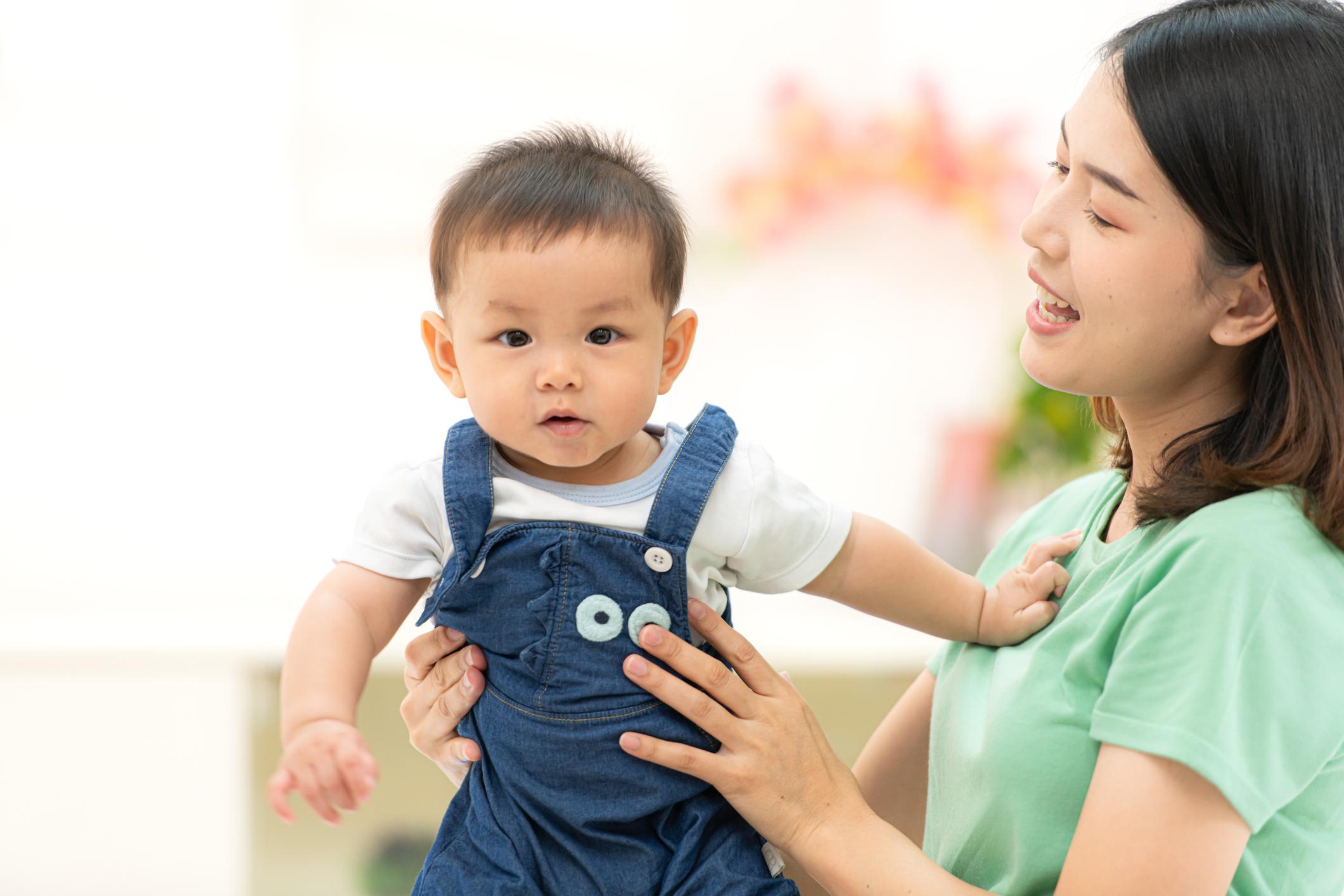
During the first year, babies learn about the world through the people who care for them. When their cries are answered and their needs are met in a predictable way, babies come to trust the teachers around them. Our teachers get to know each baby’s cues and respond to them, from signs of hunger to signs that a baby is ready to sleep. That sense of security gives your baby the confidence to move, play, and investigate the room.
How your baby grows in this room
Babies change a great deal in their first year. They are learning to move, communicate, connect with others, and make sense of what they see and touch. Much of this learning takes place during the everyday moments of care, such as feeding, diaper changes, and settling for sleep. Teachers use these moments to talk with each baby and respond to what the baby is doing.
Social & Emotional Development
Forming trusting relationships with familiar teachers
Babies form their first relationships through the way familiar teachers respond to them. Teachers comfort each baby in the way that baby finds soothing. They also name what a baby seems to feel, such as tired, hungry, or frustrated, which helps babies feel understood and begin to recognize what they feel. In time, babies also become curious about the other babies in the room as their interest in other people grows.
What your child is working on
- Turning to a familiar teacher for comfort
- Getting used to the people and sounds of the room
- Noticing and watching other babies
- Responding when a teacher names a feeling
Language & Communication
Listening, early sounds, and first words
Babies take in the sounds of language from their first weeks, well before they talk. Teachers talk with babies during care and play, describing what they are doing and what the baby is looking at. They answer a baby's sounds as part of a conversation. Books, songs, and sign language give babies more ways to listen and to communicate before they have spoken words. When teachers read with babies, they point to the pictures and name what is on the page, helping babies connect each word with the picture it describes.
What your child is working on
- Turning toward voices and familiar words
- Making sounds back when a teacher talks
- Looking at pictures in books
- Moving or making sounds along with a song
- Beginning to use a few signs
Cognitive Development
Making sense of the world through the senses
Babies investigate by touching, mouthing, looking, and listening. Teachers plan sensory play, which means activities that invite babies to explore different textures, sounds, and colors. They also offer safe toys that make a sound or move when shaken, pushed, or dropped. Toys like these help babies discover cause and effect, the idea that an action makes something happen. When teachers hide a toy and bring it back, babies begin to understand object permanence, the idea that things still exist when they are out of sight.
What your child is working on
- Shaking, dropping, and pushing toys
- Looking for a toy that has been hidden
- Investigating objects with hands, mouth, and eyes
- Noticing when things are the same or different
Physical Development
Rolling, reaching, crawling, and pulling up
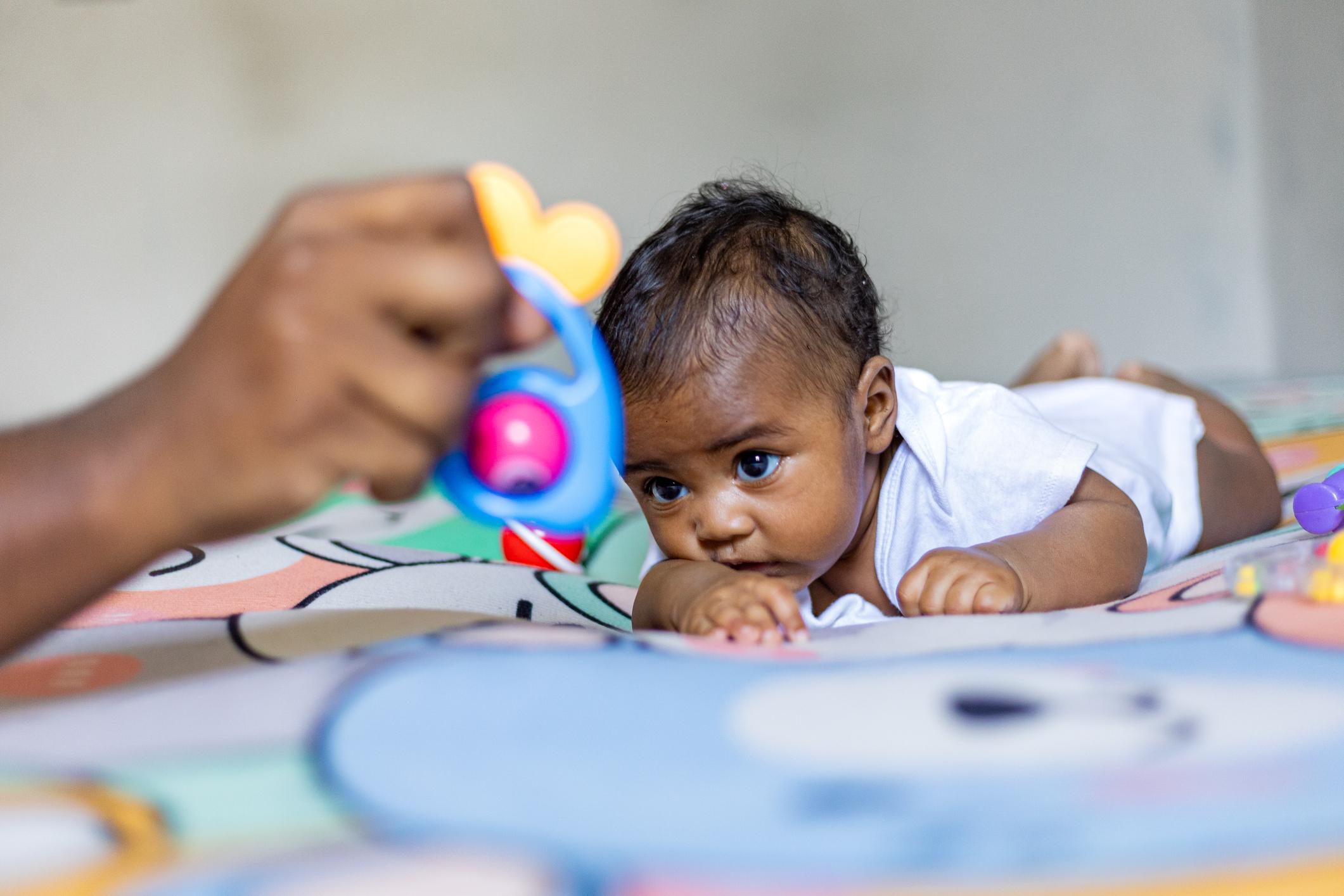
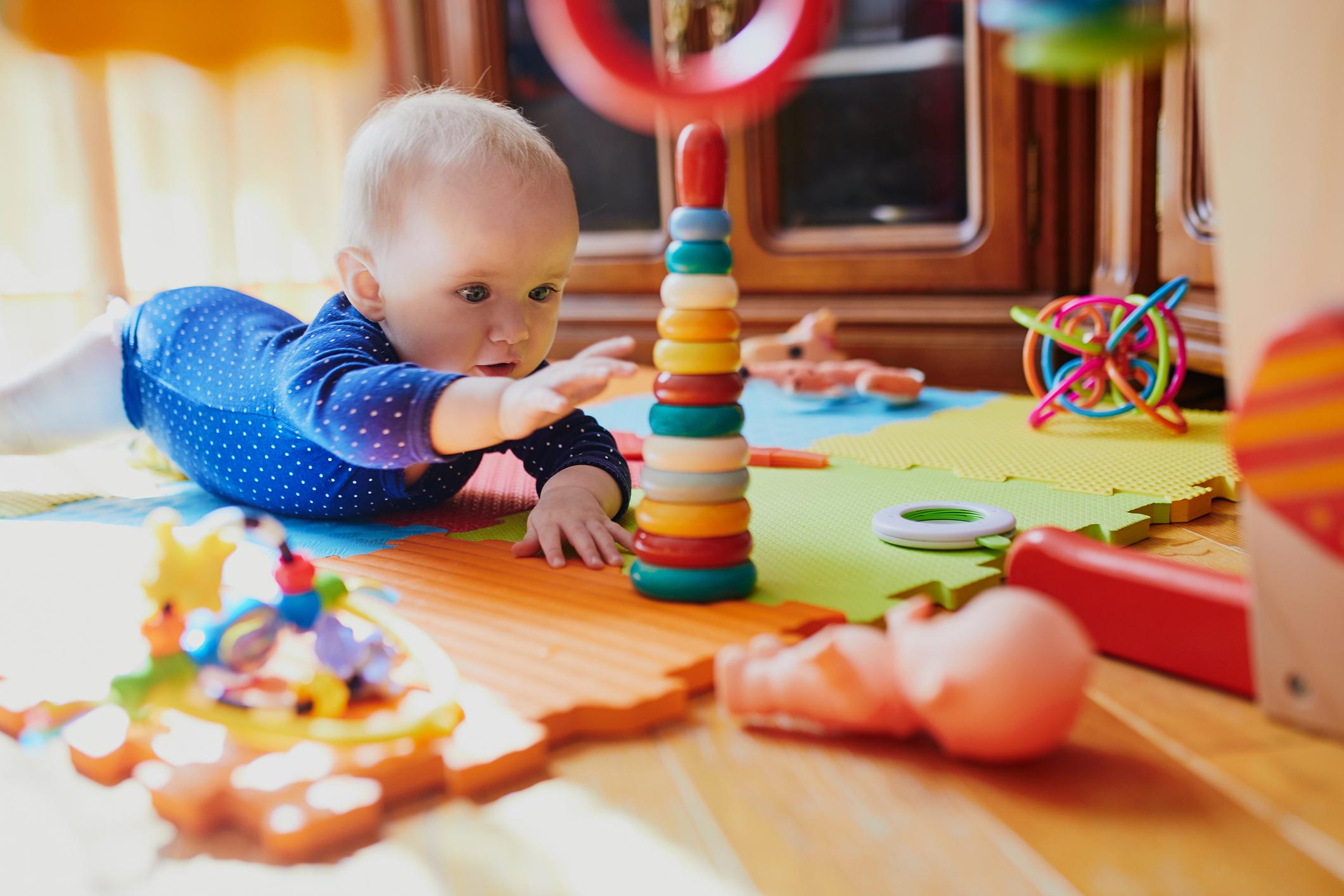
Babies build large motor skills, meaning the strength and control to move their whole bodies. Babies move from lifting the head to rolling over, sitting up, crawling, and standing with support, and each baby reaches these stages at a different time. Teachers leave room on the floor for babies to roll and crawl, and they supervise tummy time, which is play on the stomach while a baby is awake. When a baby is ready to pull up to standing, teachers offer a low, sturdy surface to hold on to. When the weather allows, teachers also take babies outside on the gated playground. Babies also build fine motor skills, the small movements of the fingers and hands, as they reach for, grasp, and pass objects from hand to hand.
What your child is working on
- Lifting their head and chest during tummy time
- Rolling over and beginning to crawl
- Pulling themselves up to standing
- Reaching for and grasping a toy
- Passing an object from one hand to the other
Early Math
Early ideas about number and shape
Babies first experience math through the sounds they hear and the objects they hold. Teachers count aloud as they care for and play with babies, describe the shape of the toy a baby is holding, and repeat songs and rhymes until the patterns become familiar. Through play like this, babies begin to experience ideas such as more and less, or full and empty.
What your child is working on
- Exploring the shape of a toy in their hands
- Recognizing a song they have heard before
- Dropping toys into a cup and tipping them out
- Taking toys out of a container one by one
Creative Arts
Music, movement, and early experiences with art
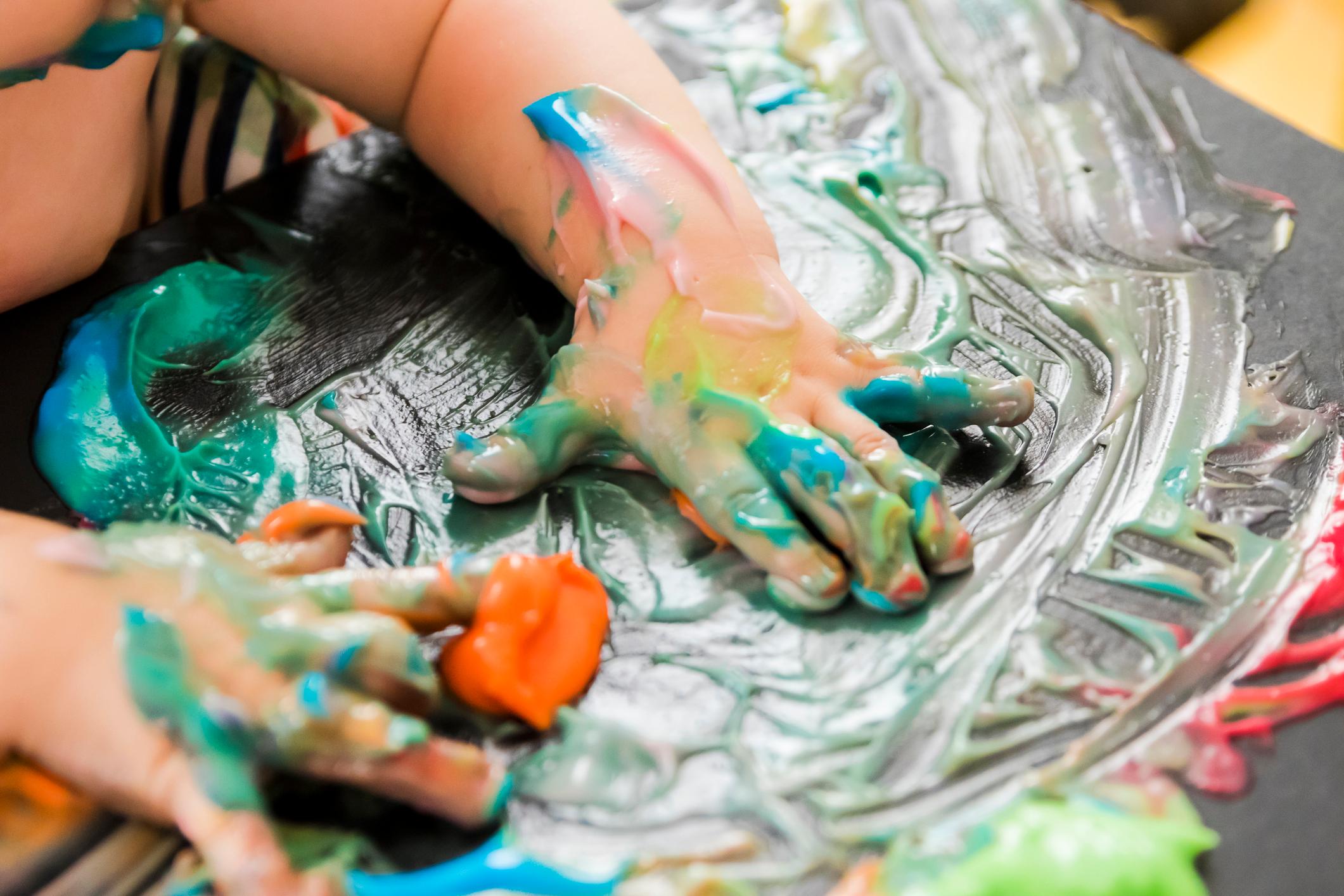
Babies respond to music and to new textures from their earliest months. Teachers sing to babies and play music for them to move to. They also offer art materials like paint for babies to touch and spread. These experiences help babies notice rhythm and sound, and learn how different materials look and feel.
What your child is working on
- Bouncing and swaying to music
- Touching paint and other textures
- Patting and squeezing soft materials
- Watching the colors they make with paint

How your baby is cared for in the Infant room
Care in the Infant room includes sleep, feeding, and diaper changes. Each baby follows their own sleep and feeding schedule, and teachers learn their patterns to provide consistent care. Between feeds and naps, the day includes sensory play, movement, and reading.
SleepHow your baby sleeps
How your baby sleeps
Each baby has an assigned crib and is placed on their back to sleep, as the American Academy of Pediatrics recommends. Teachers help babies settle and check on them throughout their sleep.
FeedingHow your baby is fed
How your baby is fed
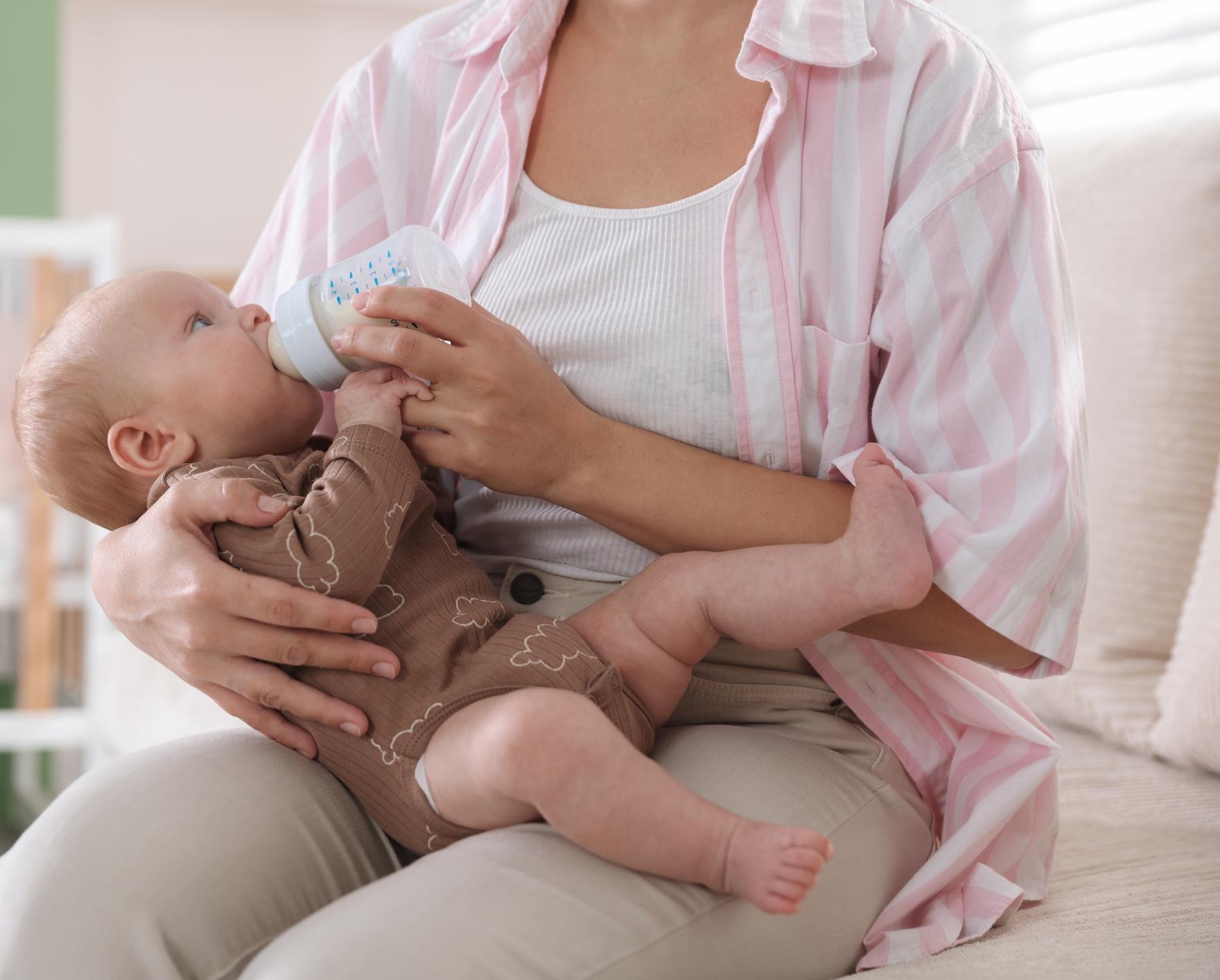
Teachers watch for signs that babies are hungry or full and respond to their needs during feeds. Nursing parents can use a private room to nurse during the day. Teachers also talk with you before introducing solid foods, which give babies new tastes and textures to explore.
DiaperingHow diaper changes are handled
How diaper changes are handled
Diapers are changed as needed. Teachers talk with each baby during diaper changes.
Keeping you connected
At the end of each day, families receive a summary through our parent app. It includes photos and information about meals, rest, and the experiences your child participated in throughout the day.
Schedule a tour of the Infant room
We welcome you to visit The Sapling School, explore our classrooms, meet our teaching team, and experience firsthand what makes our school a special place for children to grow, learn, and lead.
Your child’s next step after the Infant room is Mobile Infant Care.