
The Pre-School Program at Sapling
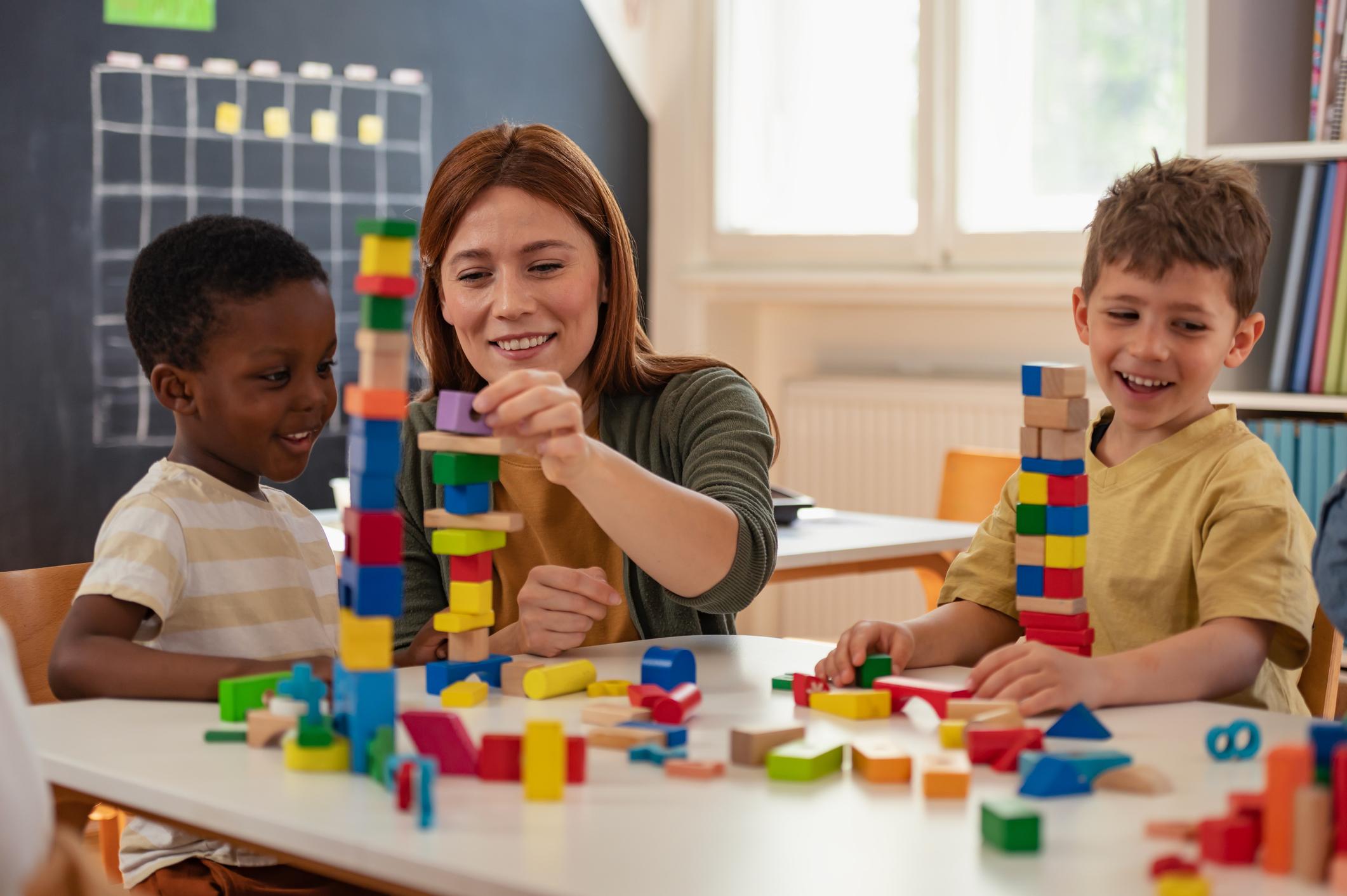
Preschoolers are curious, talkative, and increasingly interested in the people around them. They ask how things work, get captivated by interesting stories, and enjoy playing with friends. Teachers lead activities for the whole class and small groups, from reading and counting to simple science and art. They also create learning centers, areas of the room each set up for a different activity, such as books, building, or pretend play. Time for both guided learning and play helps your child build focus, get along with others, and begin to make sense of letters, numbers, and the natural world.
How your child grows in this room
Preschoolers build on the skills of earlier years, and their learning now covers early math and science as well as language, friendships, physical skills, and the arts. Lessons are organized around themes. A theme is a topic the class studies together, such as the changing seasons. The theme runs through the stories, art, and conversation of the day, and many themes begin with questions children have asked. Much of the learning comes through play, with teachers planning activities based on what children notice. Teachers pay attention to each child’s interests and pace, and they adjust their guidance to match.
The day is guided by The Sapling Curriculum, our approach to early learning.
Language & Early Literacy
Spoken language and an early interest in letters and words
Preschoolers are using language more and more to talk about their day, to give reasons, and to ask about what they notice. Many are also becoming curious about print, noticing letters in books and around the room.
Teachers read aloud and talk with children about each book, asking what a character might do next or how the character feels. These conversations add to children’s vocabulary and help them follow a story from beginning to end. Songs, rhymes, and word games build phonological awareness, the ability to hear rhymes and the separate sounds in spoken words. Teachers also point out letters and the sounds they stand for, so children begin to connect what they see on the page with what they hear.
What your child is working on
- Retelling a favorite story in their own words
- Recognizing letters, starting with those in their name
- Listening for the first sound in familiar words
- Asking questions about a book’s pictures and story
- Trying out new vocabulary in conversation
Social & Emotional Development
Learning to make friends and work things out together
Preschoolers care more about their friendships. Children want to play together, and they are learning what it takes to share materials, wait for a turn, and settle a disagreement.
Teachers lead class conversations in which children offer ideas, take turns speaking, and make plans together. They help children put feelings into words and think about how someone else might feel, which strengthens empathy and patience. When a child helps a classmate or comforts someone who is upset, teachers notice and thank the child for it. Children come to see kindness as something they can offer everyone in the room.
What your child is working on
- Naming feelings in themselves and in others
- Inviting a classmate to join their play
- Working out a disagreement by talking it over
- Sharing their ideas in class discussions
- Offering help to a classmate or teacher
Early Math
Understanding numbers through hands-on work
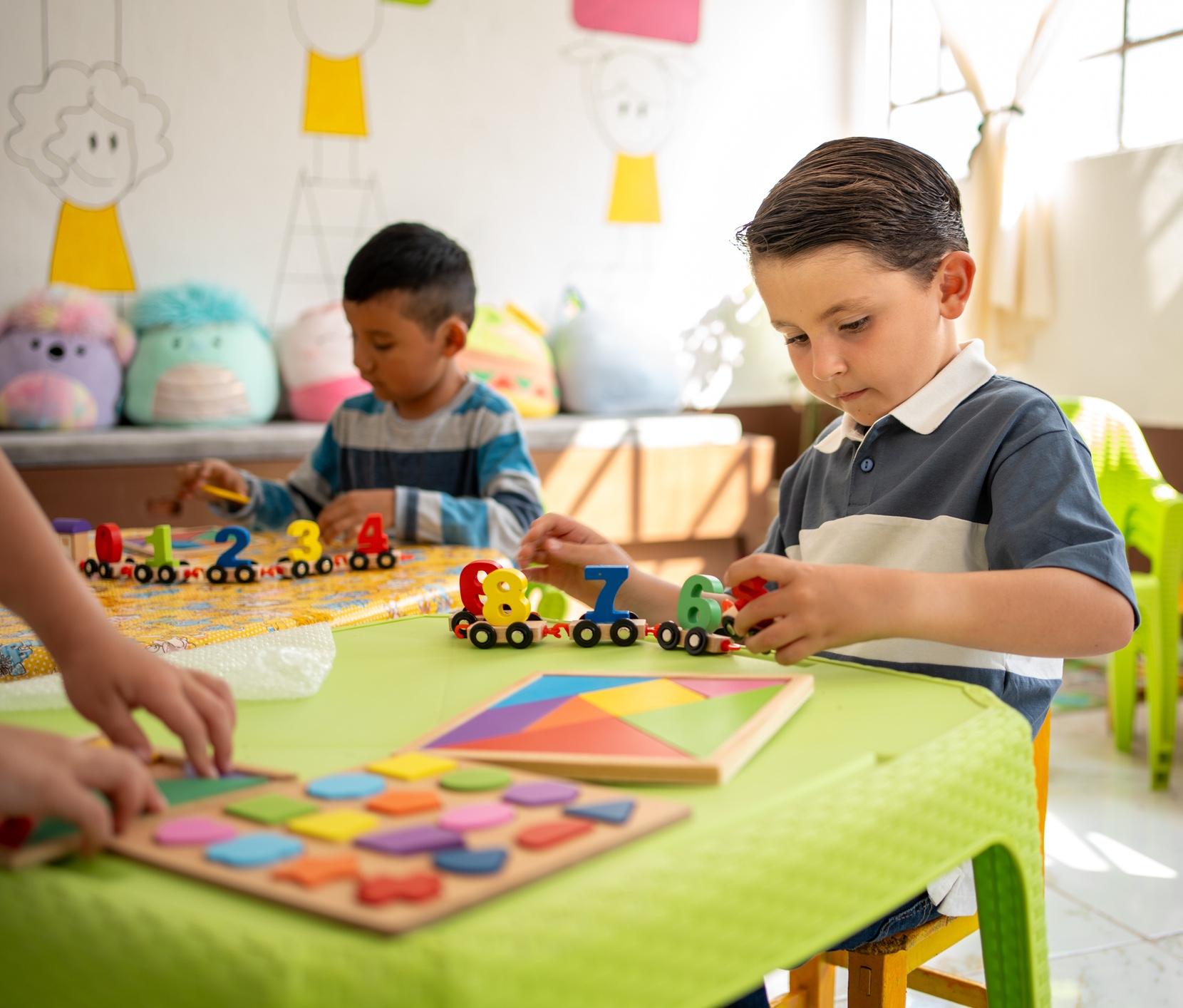
Children at this age pay closer attention to how many, how big, and what comes next. Many enjoy counting objects, comparing which pile has more, and spotting repeating patterns in colors and shapes.
Teachers set out blocks, puzzles, and objects to sort and measure, and they point out numbers and shapes during play and at meals. Counting and comparing real objects develops number sense, an understanding of what numbers mean and how amounts compare. Teachers also use a calendar to talk with children about the days of the week and the order of events. Recalling yesterday and looking ahead to tomorrow gives children practice with sequence and memory.
What your child is working on
- Counting a group of objects one by one
- Sorting objects into sets by color or shape
- Copying and extending a simple pattern
- Measuring and comparing lengths and sizes
- Describing what came first, next, and last
Early Science
Investigating the world through simple experiments
Preschoolers are full of questions about the world, such as why ice melts or what a plant needs. Many are eager to find out some of the answers for themselves.
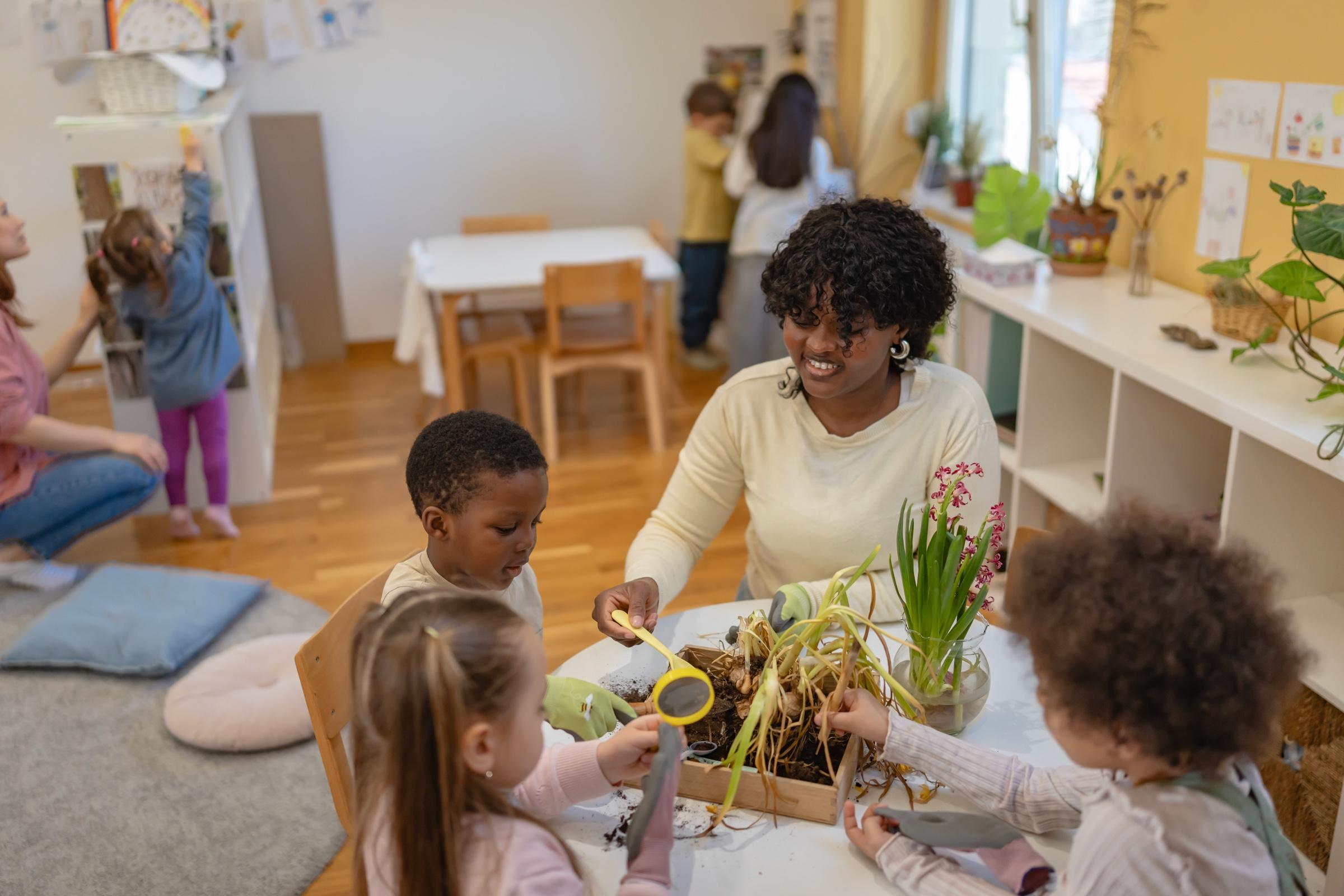
Teachers set up simple investigations around topics children are curious about. Children predict what will happen, try it out, and describe what they saw, while teachers help them count or measure the results. Talking through results helps children observe carefully and explain their reasoning. When a result surprises them, children are encouraged to try a new idea and test it again. This helps children develop flexible thinking, the ability to change course when a result is not what they predicted.
What your child is working on
- Predicting what will happen before trying it
- Looking closely at plants, insects, and weather
- Recording what they see in a drawing
- Explaining why they think something worked
- Comparing how things look, feel, and sound
Physical Development
Strengthening large motor skills and fine motor skills
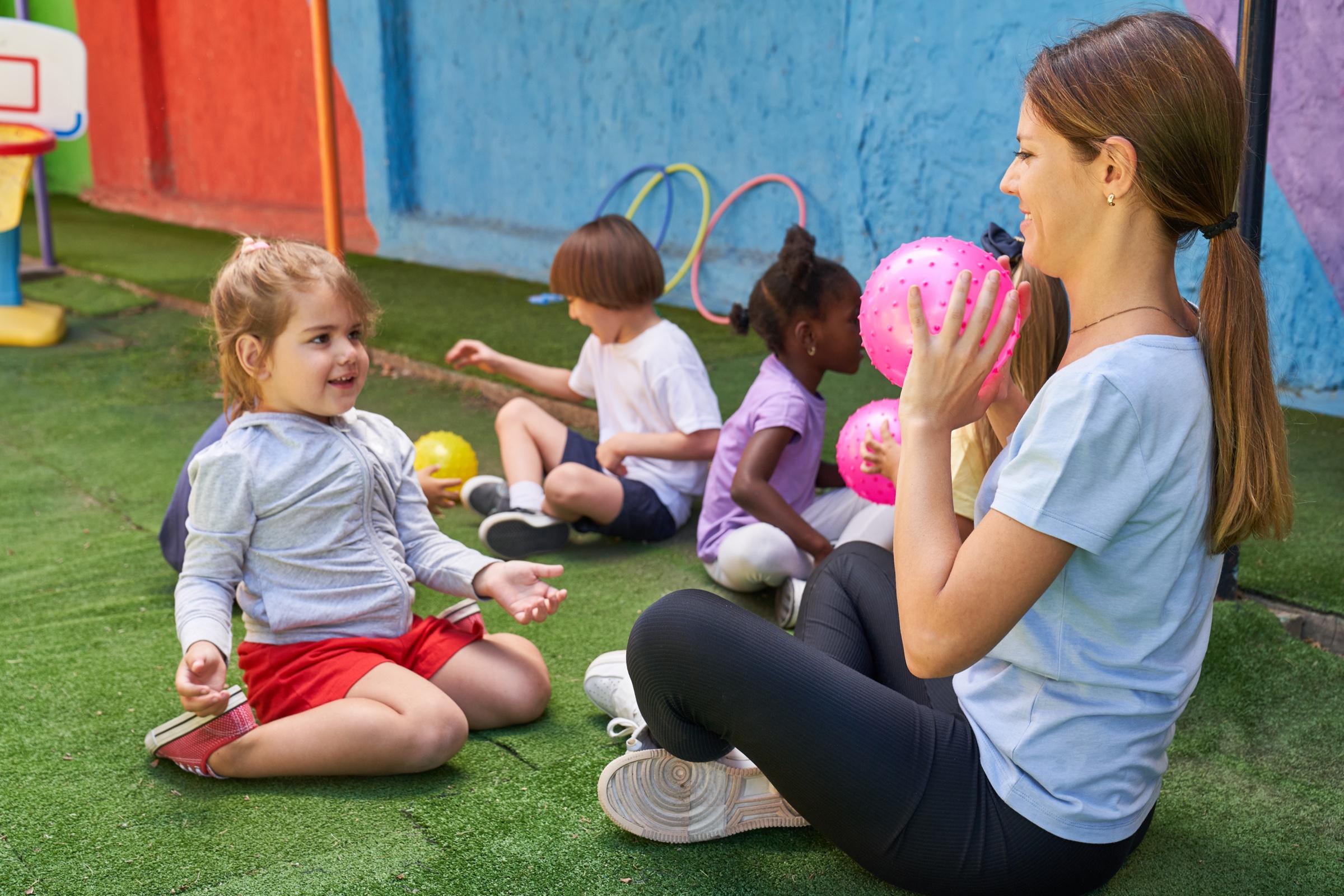
Children in this room are gaining strength, balance, and coordination, and they need plenty of chances to move. Teachers lead running, jumping, and ball games indoors and outside. These games use large motor skills, the bigger movements children make with their arms, legs, and whole body.
Children also work on fine motor skills, which rely on small, controlled movements of a child’s hands and fingers. They hold crayons and use scissors, and they practice early writing by drawing, making marks, and trying letters. Children are also encouraged to put on their own coats and wash their own hands, gaining coordination and independence in everyday routines.
What your child is working on
- Running and hopping with steadier balance
- Aiming a ball and catching one thrown to them
- Holding a crayon or pencil with control
- Drawing shapes and trying out letters
- Putting on their own coat and shoes
Creative Arts
Using imagination to tell stories and share ideas
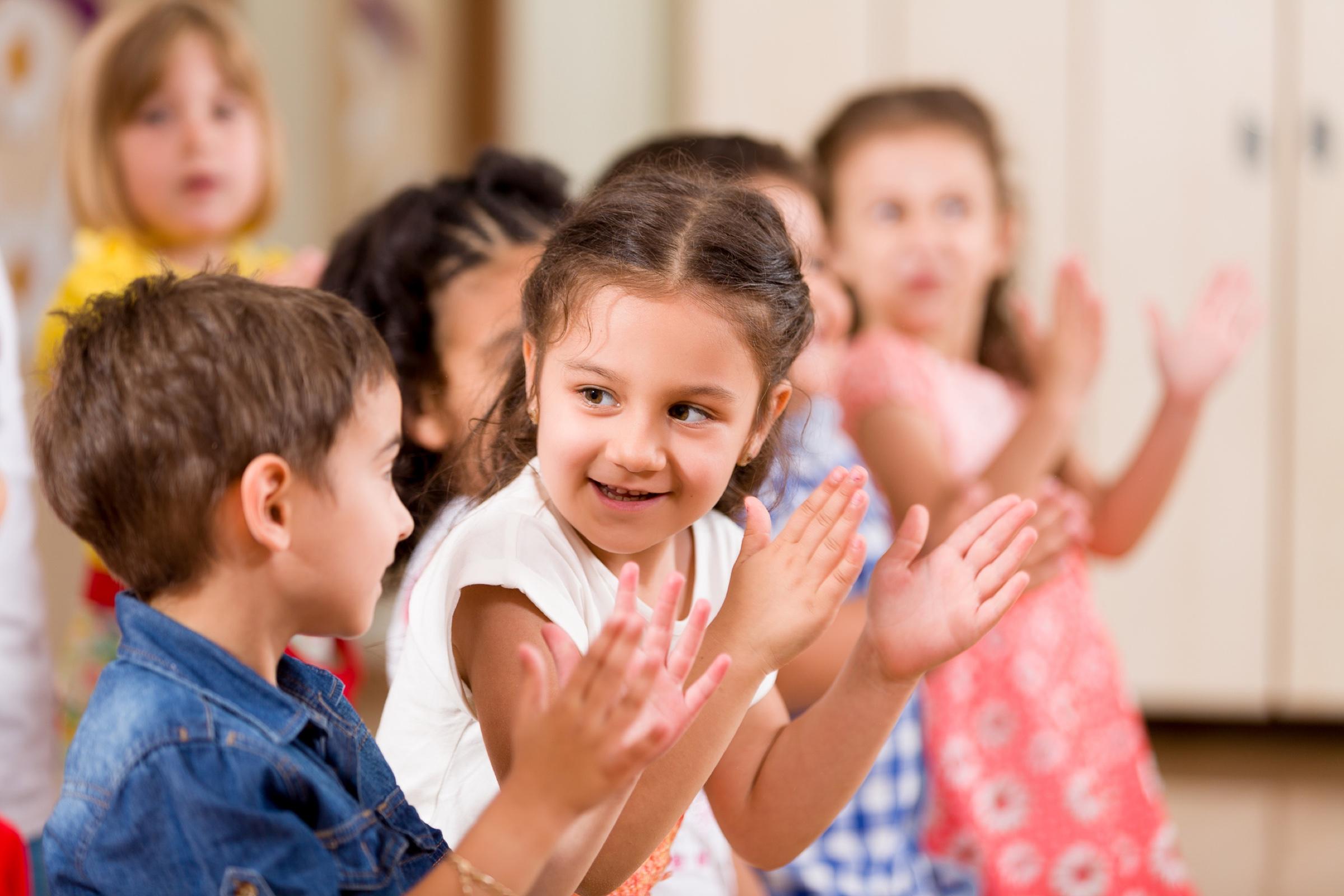
Preschoolers invent more detailed make-believe, with stories and roles they act out with classmates. Children also express ideas and feelings through pictures, songs, and movement.
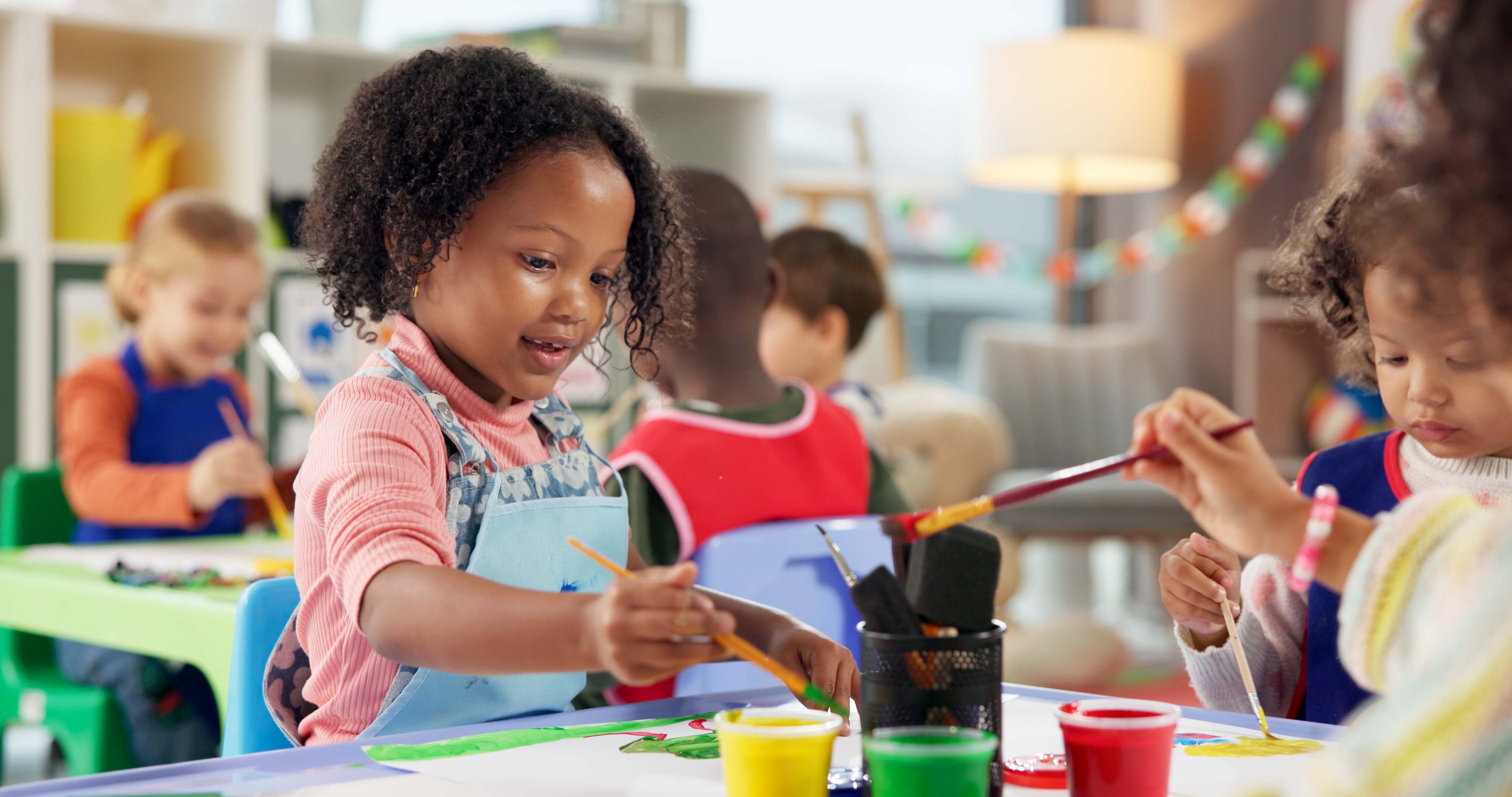
Children pretend to be characters and act out everyday roles, sing together, and make up and tell their own stories. In art, teachers give children time to experiment with paint and other materials and to decide how their own work will look. Planning a picture or a story and then showing it to classmates helps children organize their ideas and explain them to others.
What your child is working on
- Acting out roles in pretend play
- Making up a story and telling it
- Mixing colors and painting their own pictures
- Singing with classmates and moving to a beat
- Choosing materials to make something new
How your child is cared for in the Pre-School room
Alongside lessons and play, the preschool day includes rest, meals, and outdoor time. Familiar routines help children know what to expect, with teachers present throughout.
RestResting after lunch
Resting after lunch
After lunch, children settle onto their individual cots for nap time. Teachers remain with the class, helping children get comfortable and settle down to sleep.
MealtimesLunch at the tables
Lunch at the tables
Children eat together at the tables, with teachers nearby to help when needed. Mealtimes also give children practice listening and taking turns in conversation.
OutsideOutdoors on the playground
Outdoors on the playground
Weather permitting, preschoolers play on the gated playground, where they can run and join group games. Teachers supervise and help children take turns and work through disagreements. When outdoor conditions are unsuitable, teachers set up active games indoors.
Keeping you connected
At the end of each day, families receive a summary through our parent app. It includes photos and information about meals, rest, and the experiences your child participated in throughout the day.
Schedule a tour of the Pre-School room
We welcome you to visit The Sapling School, explore our classrooms, meet our teaching team, and experience firsthand what makes our school a special place for children to grow, learn, and lead.
Your child’s next step after the Pre-School room is Early Kindergarten.