
The Twos Program at Sapling
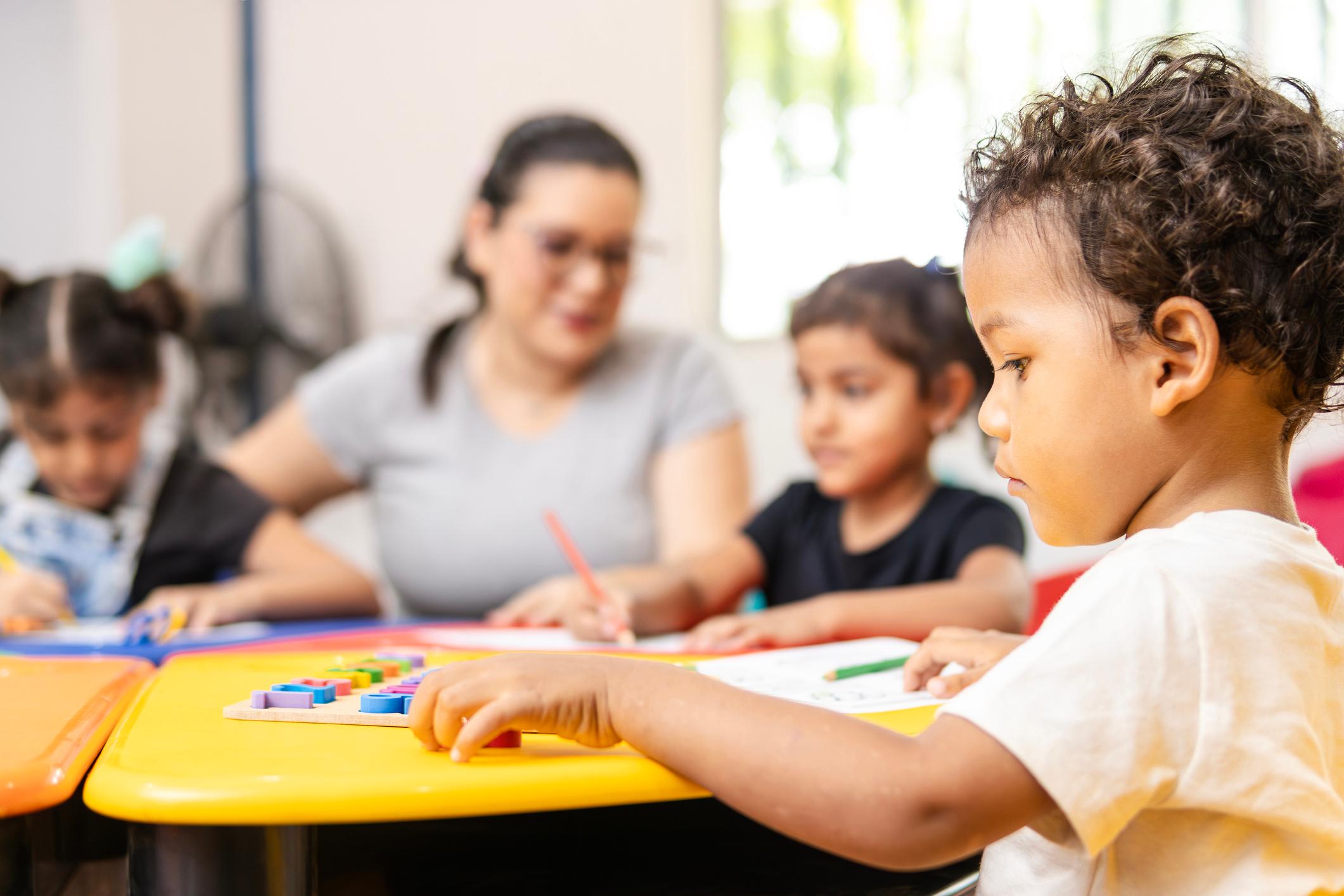
At two, children are growing in independence, confidence, and communication. They want to explore, make choices, try things for themselves, and express their ideas more clearly. Our teachers encourage these emerging skills through meaningful choices, age-appropriate responsibilities, and plenty of time to explore and talk. By giving your child the space to try, discover, and be heard, we help build the confidence and skills that support their continued growth and learning.
How your child grows in this room
The twos are a time of remarkable growth and discovery as children develop their language, social relationships, physical abilities, creativity, and understanding of the world around them. Through play, hands-on experiences, and meaningful daily interactions, children build confidence, develop independence, and discover new skills. Our teachers draw on children’s natural curiosity, providing a supportive environment where every child is encouraged to learn, explore, and grow at their own pace.
Teachers work with children as a whole class and in smaller groups. The day is guided by The Sapling Curriculum, our approach to early learning.
Language & Communication
Learning new words and speaking in sentences
Two-year-olds are rapidly developing language skills. They are learning new words, putting words together into longer sentences, asking questions, and using language to express what they want and need. Teachers model language throughout the day by naming people, objects, actions, and places, and by giving children time to respond. Teachers give clear directions during daily routines, and children practice listening to and following those directions.
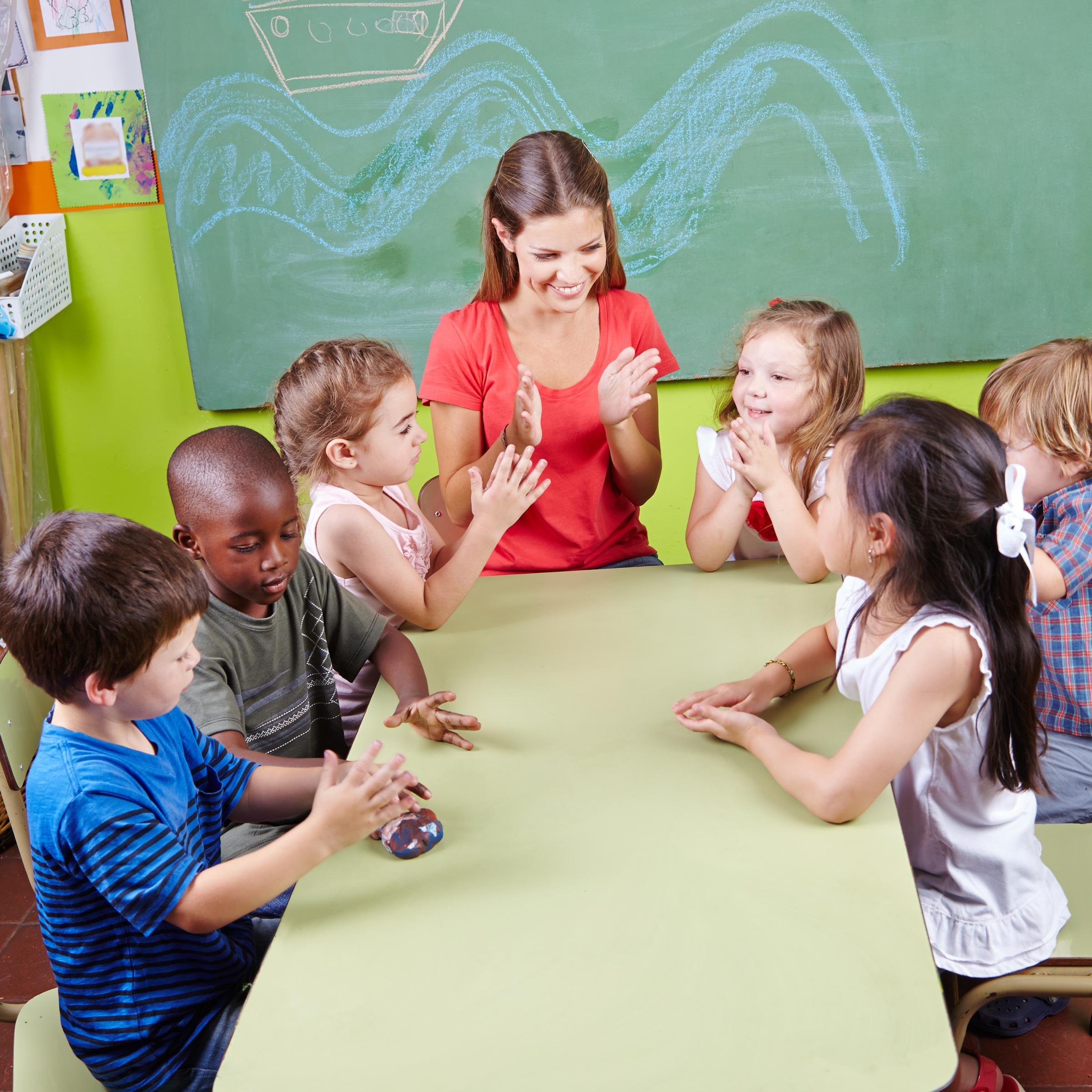
During stories and group conversations, teachers encourage children to listen, answer questions, share ideas, and take turns speaking. Children build emergent literacy, the early skills that lead to reading and writing, through books, songs, play with letters, and making marks with crayons. Teachers use simple sign language alongside speech, so that children have another way to express themselves.
What your child is working on
- Using longer sentences to communicate
- Learning the names of familiar people, objects, and places
- Listening to and following simple directions
- Noticing letters and sounds in books and songs
- Using simple signs alongside spoken language
Social & Emotional Development
Understanding feelings and building relationships
At two, children are becoming more aware of their own feelings while beginning to recognize the feelings and needs of others. Teachers name feelings as they come up, help children practice taking turns, and stay close as first friendships form. With a teacher’s guidance, children begin to work on self-regulation, which means learning to calm themselves and manage their feelings.
Through stories, everyday interactions, and pretend play with costumes, children try out different roles and points of view. As children begin playing side by side and then together, teachers encourage good manners and kindness toward others while helping children develop early skills for cooperation and friendship.
What your child is working on
- Recognizing and beginning to name feelings
- Noticing when another child may need help or comfort
- Taking turns as a teacher guides them
- Using words to communicate wants and needs
- Beginning to cooperate and play with other children
Self-Care & Independence
Learning to manage everyday tasks
Two-year-olds are eager to do more on their own. Everyday routines give children meaningful opportunities to practice independence, build confidence, and develop responsibility. Teachers allow children the time they need to try tasks themselves and help when needed.
Children participate in routines such as putting on their shoes, washing their hands, helping to clean up the room, and preparing for meals. Potty training begins when a child is ready, and teachers follow the approach each family uses at home so that home and the classroom stay consistent.
What your child is working on
- Putting on and taking off simple clothing and shoes
- Washing and drying hands with increasing independence
- Taking part in potty training when ready
- Helping to put toys and materials away
- Following familiar daily routines
Physical Development
Strengthening coordination, balance, and control
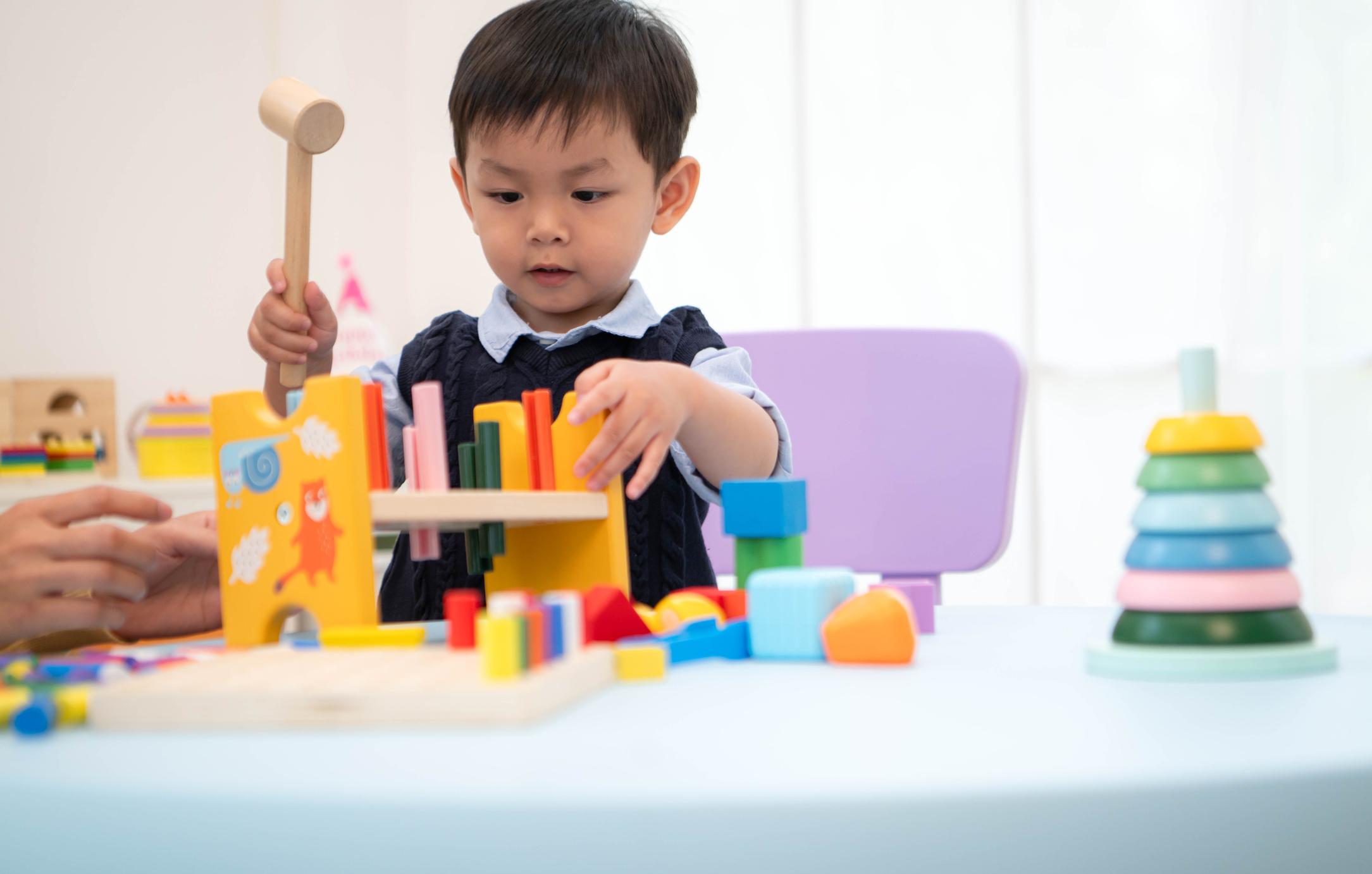
Children are gaining more control over both large and small movements. Children build large motor skills, the movements of the arms, legs, and whole body, through daily active play. Teachers stay nearby as children work on coordination and balance.
Teachers plan activities that develop fine motor skills, the small movements of the hands and fingers that children use for everyday tasks. Through drawing and cutting, children build hand strength and control.
What your child is working on
- Kicking, throwing, and chasing a ball
- Climbing and moving across different surfaces
- Keeping their balance while running and climbing
- Pouring and scooping from one container to another
- Threading, drawing, and beginning to use scissors
Early Math & Problem Solving
Understanding numbers, patterns, and how things work
Early mathematical thinking begins with the things children see and use every day. Teachers build counting, sorting, measuring, and noticing patterns into routines and play. Children begin connecting number words with real quantities as they count objects, people, and materials around them.
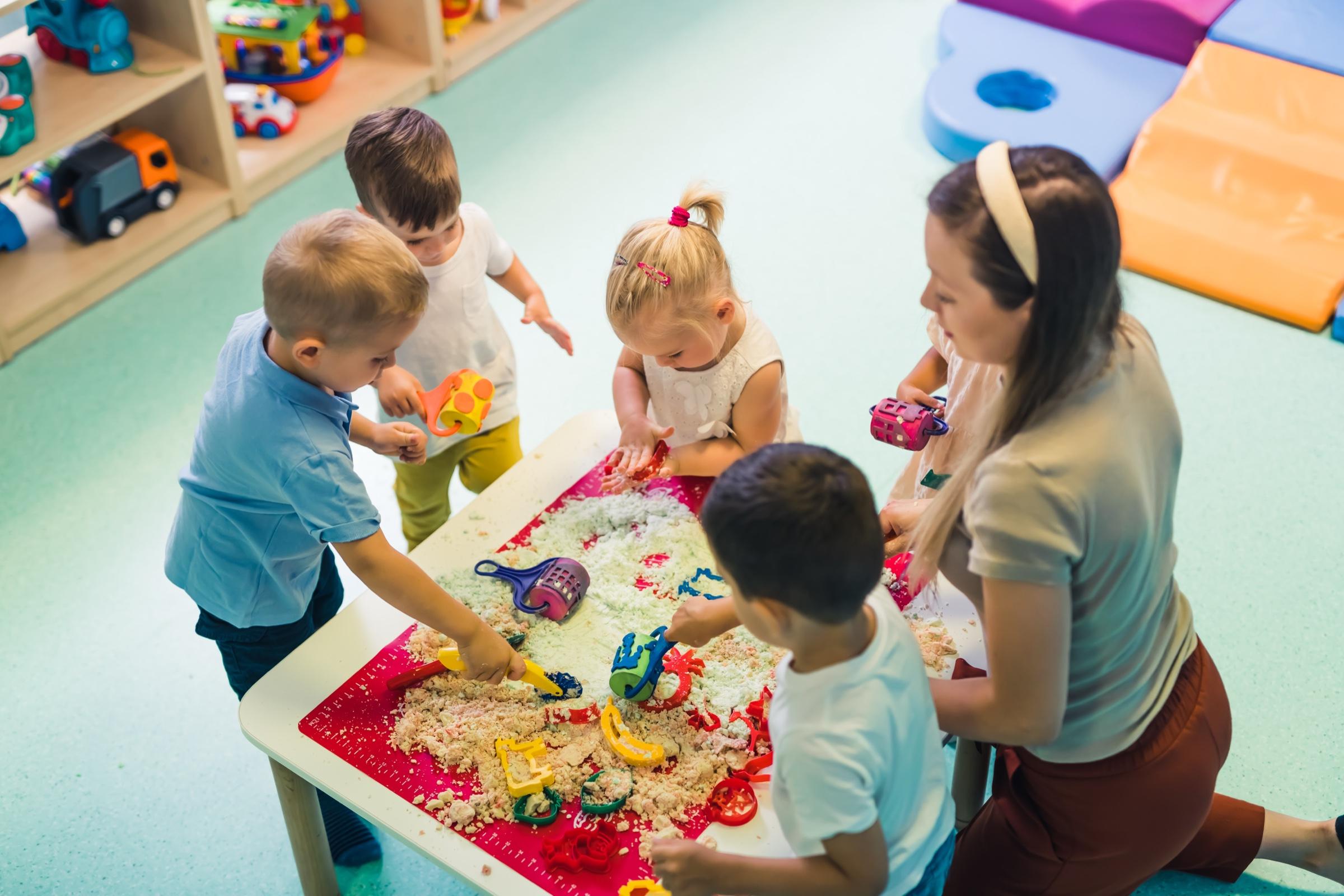
During hands-on science and sensory play, children make predictions, test ideas, and discover what happens next. Water play, sorting activities, building with blocks, and simple experiments let children compare size, shape, and quantity and see cause and effect.
What your child is working on
- Recognizing small quantities and patterns
- Counting objects one at a time
- Sorting by color, shape, size, or other characteristics
- Comparing more and less, big and small
- Making predictions and discovering cause and effect
Creative Arts
Expressing ideas in music, movement, and art
Creative experiences let two-year-olds experiment and communicate their ideas in their own ways. Music and movement are part of everyday learning, with songs, rhythms, and actions that invite children to join in and express themselves.
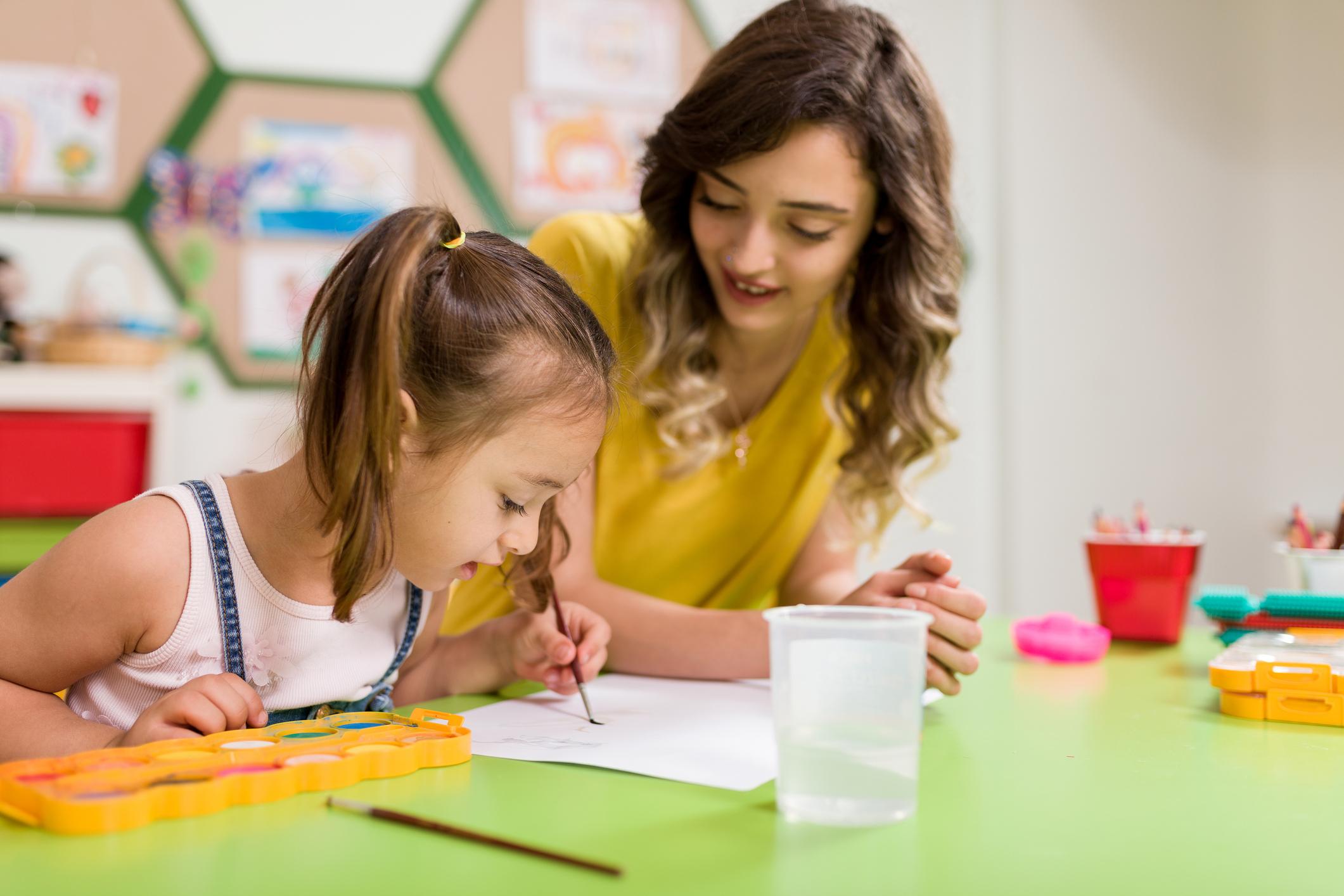
Teachers provide materials such as paint, crayons, glue, paper, and other age-appropriate resources. Children are free to try the materials, make choices, and share their own ideas about what they create. Teachers keep the focus on the process rather than a finished product, helping children develop imagination and a willingness to try new ideas.
What your child is working on
- Singing and participating in familiar songs
- Moving their bodies in response to music
- Exploring color, texture, shape, and different art materials
- Using art materials with more control
- Describing and sharing ideas about their creations
How your child is cared for in the Twos room
Teachers guide children through familiar routines for meals, rest, and play. A steady daily rhythm helps young children feel at ease and know what to expect.
RestA quiet break after lunch
A quiet break after lunch
After lunch, children settle into a quiet rest period, with a teacher remaining with the class. Children can nap, or rest quietly if they do not fall asleep. Rest gives children a peaceful break before afternoon activities.
MealtimesLunch at the tables
Lunch at the tables
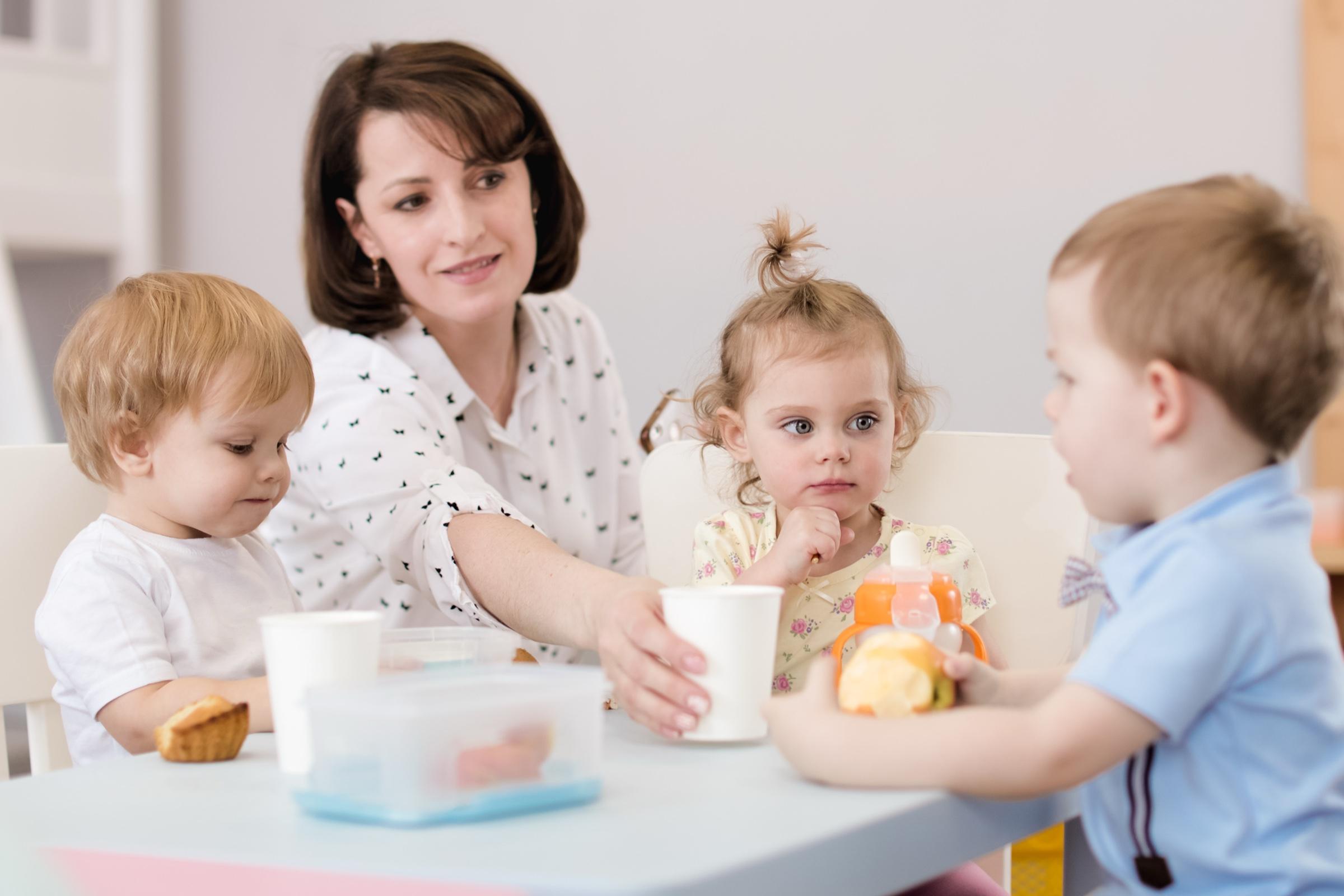
Lunch is served at the tables, with a teacher sitting with the children during the meal. Children practice using forks and spoons as they become comfortable feeding themselves. Food is cut into appropriately sized pieces that children can manage on their own.
OutsideTime to move and play
Time to move and play
When the weather allows, children play on the school’s gated playground, with teachers nearby to supervise. When the class cannot go outside, teachers lead active games indoors, so children build strength and coordination in either setting.
Keeping you connected
At the end of each day, families receive a summary through our parent app. It includes photos and information about meals, rest, and the experiences your child participated in throughout the day.
Schedule a tour of the Twos room
We welcome you to visit The Sapling School, explore our classrooms, meet our teaching team, and experience firsthand what makes our school a special place for children to grow, learn, and lead.
Your child’s next step after the Twos room is Pre-School.